Shutt End Railway
The Earl of Dudley’s Railway was a standard gauge railway that opened on the 2nd June 1829 at around the same time as George Richmond built Ruiton Windmill. It connected the collieries & foundries of Pensnett & Gornal to the Staffordshire & Worcestershire Canal at Ashwood Basin and the large network around the Earl of Dudley’s Iron Works at Round Oak near Brierley Hill. The coal pits of the Pensnett, Himley & Gornal areas were on the Western edge of the Black Country with the hills of Wren's Nest, Castle Hill, Sedgley Beacon and Turner's Hill somewhat blocking easy access to the Birmingham Canal navigations. The Staffordshire & Worcestershire Canal opened in 1772, the same year as the Birmingham Canal but when the Dudley Tunnel opened in 1791 the route from Brockmoor to Park Head at the Southern end of the tunnel passed through eleven locks. By 1840 the Stourbridge Extension Canal had been built, financed by Sir Stephen Glynne (who the Crooked House pub was originally named after), the owner of Oak Farm Iron and Brick works and Oak Farm Colliery. As Lord Ward John William Ward, 1st Earl of Dudley (1781 - 1833) owned most of the mines in Staffordshire, he decided to build a railway to speed up the process. When he died unmarried and childless, his estates passed to his second Cousin Reverend William Humble Ward (1781 - 1835). The Netherton Tunnel was the last canal tunnel to be built in Britain during the Canal Age as the railways had largely taken over the movement of goods. An agreement to construct the first standard gauge railway in the area was signed in 1827 by James Foster, a local ironmaster, and Francis Downing, the mineral agent of John William Ward. The Line ran from Corbyn's Hall Colliery in Pensnett to Ashwood Basin. Corbyn's Colliery, Corbyn's Hall and the surrounding estate were owned along with Shutend House at this time by the Gibbons family, headed by the three brothers – Thomas (1730-1813), William (1732-1807) and Benjamin (1735-1832). They were a significant banking and industrial family with William's descendents being the world renowned brick manufacturers and Thomas's heavily involved in Iron, Coal and Steel. The line ran up a couple of inclines (one at Ashwood and one at Corbyn’s Hall) and past the windmill at Wall Heath with small branch lines to Windmill Wharf for coal and the Heathbrook sand pits and a further branch to Dawleybrook Wharf for coal. Once at Shutt End there were a number of branch lines reaching out to all the local collieries with a connection to Lord Dudley's tramway from Himley Colliery up to Baggeridge. The railway carried coal traffic from a number of mines along its route and pig iron and iron products from the works of John Bradley and Co. (owned by James Foster) at Shutt End. It was the first railway line in the Midlands and Southern region of England to run a steam locomotive - The Agenoria, which can now be seen in the National Railway Museum in York. The Agenoria ran on the Shutt End line from 1829 to the 1864. The locomotive Agenoria was built at Lion Works by Foster Rastrick at Stourbridge and had a very tall chimney, designed to limit the noise and smoke emitted. They also built the ‘Stourbridge Lion’, the first English locomotive to run on rails in America, on a mine tramway at Honesdale, Pennsylvania, which later became part of the Delaware and Hudson Railroad. John Rastrick also planned the Liverpool & Manchester (L&M) Railway and the Rainhill Trials, significant events in the whole history of railways. John Rastrick had first become involved with the Liverpool & Manchester in January 1825 when he and George Stephenson had visited collieries in the North East of England on behalf of the L&M’s promoters to ascertain the performance of their steam locomotives.

The Canals
Opened
From:
To:
Staffordshire and Worcestershire Canal
1772
River Severn
Trent and Mersey Canal
Birmingham Canal Navigations (BCN)
1772
Gas Street Basin, Birmingham
Staffordshire and Worcestershire Canal at Aldersley
Dudley Canal - No. 1
1779
Birmingham Canal navigations Old Main Line
Worcester and Birmingham Canal
Stourbridge Canal
1779
Brierley Hill
Stourton Junction Staffordshire and Worcestershire Canal
Dudley Tunnel - Dudley Canal Line No. 1
1791
Tipton Portal
Pensnett Canal
Dudley Canal - No. 2
1798
Park Head Junction, Netherton
Worcester and Birmingham Canal at Selly Oak
BCN New Main Line
1838
Birmingham
Tipton
Stourbridge Extension Canal
1840
Shut End Colliery
Brockmoor Junction (Stourbridge Canal)
Netherton Tunnel
1858
Dudley Port Junction
Windmill End Junction


Shutt End Railway
The Earl of Dudley’s Railway was a standard gauge railway that opened on the 2nd June 1829 at around the same time as George Richmond built Ruiton Windmill. It connected the collieries & foundries of Pensnett & Gornal to the Staffordshire & Worcestershire Canal at Ashwood Basin and the large network around the Earl of Dudley’s Iron Works at Round Oak near Brierley Hill. The coal pits of the Pensnett, Himley & Gornal areas were on the Western edge of the Black Country with the hills of Wren's Nest, Castle Hill, Sedgley Beacon and Turner's Hill somewhat blocking easy access to the Birmingham Canal navigations. The Staffordshire & Worcestershire Canal opened in 1772, the same year as the Birmingham Canal but when the Dudley Tunnel opened in 1791 the route from Brockmoor to Park Head at the Southern end of the tunnel passed through eleven locks. By 1840 the Stourbridge Extension Canal had been built, financed by Sir Stephen Glynne (who the Crooked House pub was originally named after), the owner of Oak Farm Iron and Brick works and Oak Farm Colliery. As Lord Ward John William Ward, 1st Earl of Dudley (1781 - 1833) owned most of the mines in Staffordshire, he decided to build a railway to speed up the process. When he died unmarried and childless, his estates passed to his second Cousin Reverend William Humble Ward (1781 - 1835). The Netherton Tunnel was the last canal tunnel to be built in Britain during the Canal Age as the railways had largely taken over the movement of goods. An agreement to construct the first standard gauge railway in the area was signed in 1827 by James Foster, a local ironmaster, and Francis Downing, the mineral agent of John William Ward. The Line ran from Corbyn's Hall Colliery in Pensnett to Ashwood Basin. Corbyn's Colliery, Corbyn's Hall and the surrounding estate were owned along with Shutend House at this time by the Gibbons family, headed by the three brothers – Thomas (1730-1813), William (1732-1807) and Benjamin (1735-1832). They were a significant banking and industrial family with William's descendents being the world renowned brick manufacturers and Thomas's heavily involved in Iron, Coal and Steel. The line ran up a couple of inclines (one at Ashwood and one at Corbyn’s Hall) and past the windmill at Wall Heath with small branch lines to Windmill Wharf for coal and the Heathbrook sand pits and a further branch to Dawleybrook Wharf for coal. Once at Shutt End there were a number of branch lines reaching out to all the local collieries with a connection to Lord Dudley's tramway from Himley Colliery up to Baggeridge. The railway carried coal traffic from a number of mines along its route and pig iron and iron products from the works of John Bradley and Co. (owned by James Foster) at Shutt End. It was the first railway line in the Midlands and Southern region of England to run a steam locomotive - The Agenoria, which can now be seen in the National Railway Museum in York. The Agenoria ran on the Shutt End line from 1829 to the 1864. The locomotive Agenoria was built at Lion Works by Foster Rastrick at Stourbridge and had a very tall chimney, designed to limit the noise and smoke emitted. They also built the ‘Stourbridge Lion’, the first English locomotive to run on rails in America, on a mine tramway at Honesdale, Pennsylvania, which later became part of the Delaware and Hudson Railroad. John Rastrick also planned the Liverpool & Manchester (L&M) Railway and the Rainhill Trials, significant events in the whole history of railways. John Rastrick had first become involved with the Liverpool & Manchester in January 1825 when he and George Stephenson had visited collieries in the North East of England on behalf of the L&M’s promoters to ascertain the performance of their steam locomotives.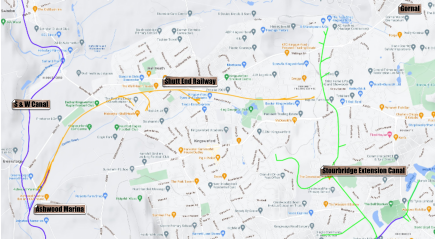

The Canals
Opened
From:
To:
Staffordshire and Worcestershire Canal
1772
River Severn
Trent and Mersey Canal
Birmingham Canal Navigations (BCN)
1772
Gas Street Basin, Birmingham
Staffordshire and Worcestershire Canal at Aldersley
Dudley Canal - No. 1
1779
Birmingham Canal navigations Old Main Line
Worcester and Birmingham Canal
Stourbridge Canal
1779
Brierley Hill
Stourton Junction Staffordshire and Worcestershire Canal
Dudley Tunnel - Dudley Canal Line No. 1
1791
Tipton Portal
Pensnett Canal
Dudley Canal - No. 2
1798
Park Head Junction, Netherton
Worcester and Birmingham Canal at Selly Oak
BCN New Main Line
1838
Birmingham
Tipton
Stourbridge Extension Canal
1840
Shut End Colliery
Brockmoor Junction (Stourbridge Canal)
Netherton Tunnel
1858
Dudley Port Junction
Windmill End Junction

;void;)
;void;)


- News
- Bookings
- History
- Galleries
- The Area
- The Mill
- Friends
- Contact
