Black Country Living Museum
The Black Country Living Museum is an open-air museum just three miles from Ruiton Mill, that brings the history of the Black
Country to life. The Black Country was one of the first industrialized areas in the world, known for its coal mines, ironworks, and
factories during the Industrial Revolution.
What to Expect at the Museum
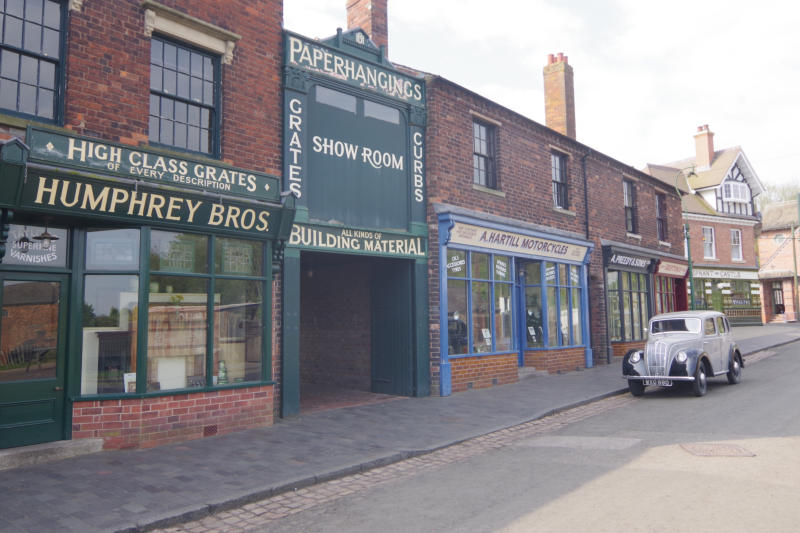
The museum recreates life in the Black Country between the late 18th and early 20th centuries, with over 50 historic buildings
relocated and reconstructed. Visitors can explore:
•
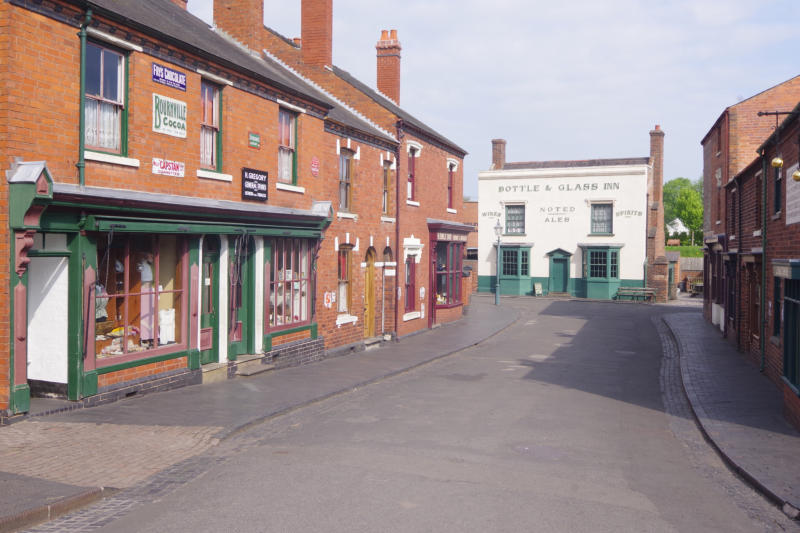
Authentic Shops and Houses – Walk through a Victorian-era high street with real historical buildings.
•
Industrial Workshops – See blacksmiths, chain makers, and other traditional trades in action.
•
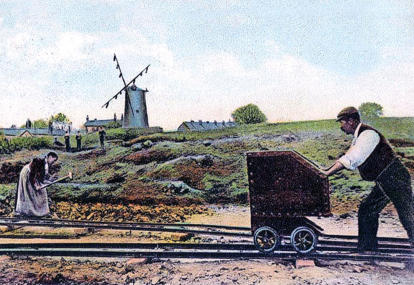
Coal Mine Experience – Go underground to experience the tough working conditions of miners.
•
Vintage Vehicles – Ride a historic tram or bus around the site.
•
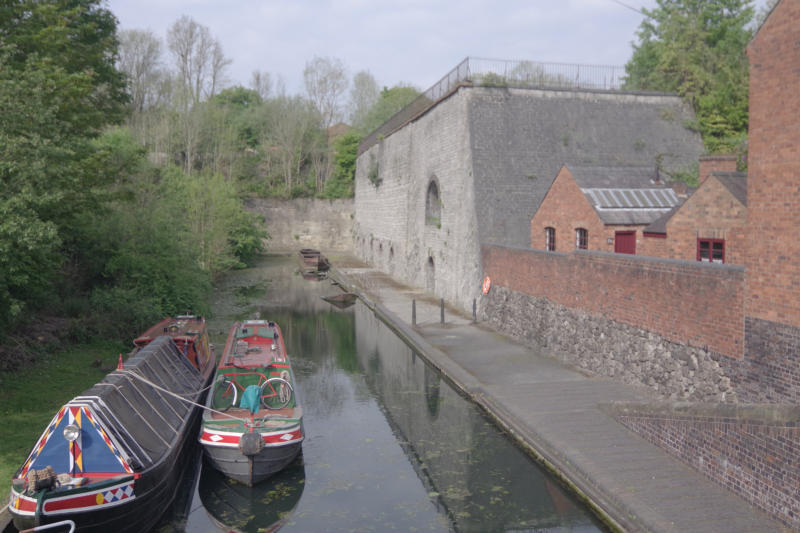
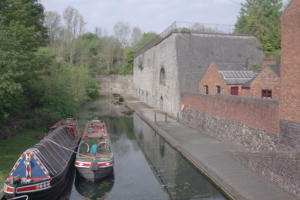
Canal Side Village – Discover the importance of the Black Country’s canal system for industry.
•
1920s and 1930s Expansion – The museum has been adding more buildings from this period, including a recreation of
the famous Elephant & Castle pub.
Why is it Important?
The museum preserves the working-class heritage of the Black Country, an area that played a crucial role in Britain’s industrial development. It provides a living history experience,
with costumed actors bringing the past to life through storytelling, demonstrations, and period-specific activities.
Fun Facts
•
Parts of Peaky Blinders were filmed at the museum.
•
The Black Country dialect, considered one of the oldest forms of English, is often spoken by the actors.
•
The museum has a famous fish and chip shop where the food is cooked in beef dripping, just like in the old days.
1. Start at the Visitor Centre
•
Grab a map and check the schedule for live demonstrations (blacksmithing, glassmaking, etc.).
•
If you’re interested in Peaky Blinders filming locations, ask the staff for highlights.
2. Explore the Canal & Industrial Area
•
Visit the lime kilns and learn how they were used in iron production.
•
Take a canal boat trip through the Dudley Tunnel (extra charge, but
worth it!).
•
See the chain-making workshop, where workers once toiled under
harsh conditions.
•
This is one of the most immersive parts of the museum. You’ll experience what it was like for miners working in near-total
darkness. (Note: It can be claustrophobic and has uneven ground, so wear sturdy shoes.)
4. Walk Through the 19th-Century Village
•
Stop by St. James’s School and try writing on a slate like a Victorian child.
•
Visit the Blacksmith’s Forge to watch live demonstrations.
•
Explore small shops, including a sweet shop where you can buy traditional Black Country treats.
5. Grab Lunch at Hobbs & Sons Fish & Chips
•
A must-try! Cooked the old-fashioned way in beef dripping, giving it a unique flavour.
•
Queues can get long, so try to go before or after peak lunch hours.
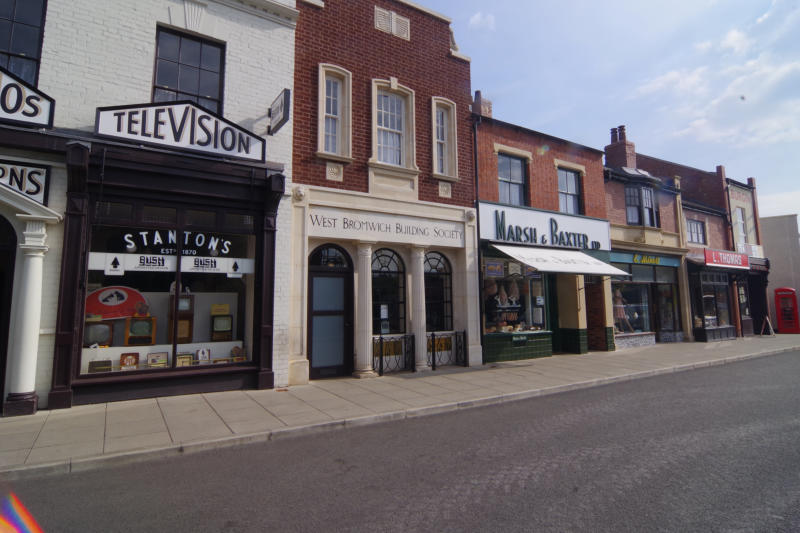
6. Visit the 1920s & 1930s High Street (Newer expansion!)
•
Check out the Elephant & Castle Pub, a recreation of a famous Dudley landmark.
•
See the motor garage with vintage vehicles.
•
Visit the cinema for a silent film experience from the early 20th century.
7. Ride a Vintage Bus or Tram
•
These run throughout the day and offer a great way to see the museum without walking too much.
8. Finish at the Gift Shop & Café
•
Pick up some traditional sweets, books on local history, or even a bottle of locally brewed beer.



Industry & the Blast Furnaces
The Gornal area has a rich history dating back to ancient times.
Archaeological finds suggest that the region was inhabited during the
Bronze Age, and there is evidence of Roman presence in the area as well.
However, Gornal's significant development occurred during the medieval
period when it was part of the manor of Sedgley.
The nail-making industry in Dudley was closely related to the region's
iron industry, which had access to abundant iron ore and coal, essential
raw materials for nail production.
In the early stages of the nail-making industry, nails were typically
handmade by individual blacksmiths or small groups of workers. These
craftsmen used traditional techniques, hammering out nails from iron
bars. However, with the advancements in iron production and the
availability of water-powered hammers and rolling mills, nail production
became more mechanized and efficient.
Gornal's nail makers benefited from the proximity to ironworks and coal
mines, which ensured a steady supply of raw materials. The industry
thrived during the 17th and 18th centuries, contributing to Gornal’s
economic growth. Nail making provided employment for many locals
and became a vital part of the village’s economy.
During the Industrial Revolution in the 18th and 19th centuries, the
Dudley area, including Gornal, experienced rapid industrialization. Coal
mining, ironworking, and other industries thrived in the region, leading
to population growth and economic prosperity. Gornal's proximity to
natural resources like coal and iron ore contributed to its industrial
development.
By the 19th century, nail making had become a significant cottage
industry and many of the pubs in the village were known as the ‘Nailers’
or the ‘Miners’ due to the significant number of people that frequented
the establishments.
By the early 1600’s there were numerous blast furnaces in the area and
in 1619 Dud Dudley came back from Oxford University to run his father
Edward Sutton’s ironworks at Himley.
The blast furnace is a type of metallurgical furnace used for smelting to
produce industrial metals, generally iron, but also others such as lead or
copper. Its origin can be traced back to ancient civilizations, but the
modern blast furnace as we know it today has a rich history that spans
several centuries.
•
Ancient Furnaces: The concept of using furnaces for metal
smelting dates back to ancient times. Archaeological evidence
suggests that early civilizations, including the Egyptians and the
Hittites, used simple furnaces to extract metals from ores.
•
Medieval Europe: The blast furnace as we recognize it today began
to take shape in medieval Europe. By the 14th century, blast furnaces
were used in Europe to smelt iron from iron ore. These early furnaces
were relatively small and operated using charcoal as a fuel source.
•
Introduction of Coke: In the 17th century, an important development
occurred with the introduction of coke, a derivative of coal, as a fuel
for the blast furnace. Abraham Darby, an English ironmaster,
successfully used coke instead of charcoal in his furnaces in the early
18th century. This innovation significantly increased the efficiency of
the blast furnace and facilitated the production of iron on a larger
scale.
•
Industrial Revolution: The Industrial Revolution in the 18th and 19th
centuries saw a tremendous increase in iron production. Blast
furnaces became larger and more efficient during this period, and
iron became a vital material for various industries, including the
construction of railways, bridges, and machinery.
•
Technological Advancements: Throughout the 19th and 20th
centuries, various technological advancements further improved
blast furnace design and efficiency. Hot blast technology, which
preheats air blown into the furnace, was introduced in the early 19th
century, significantly reducing fuel consumption. In the 20th century,
the development of water-cooled stoves and other innovations
continued to enhance the efficiency and productivity of blast
furnaces. The Round Oak Iron Works were built in 1857 at Round
Oak, near Brierley Hill, under the direction of Richard Smith, the Earl
of Dudley's principal agent. The Earl of Dudley already owned coal
and iron mines, limestone quarries, sand-pits and blast furnaces.
•
Modern Era: Today, blast furnaces are still widely used in the
production of iron and steel around the world. While alternative
methods of iron production, such as direct reduction, have been
developed, blast furnaces remain a crucial component of the global
steel industry.
The blast furnace has played a pivotal role in the history of metallurgy
and industrialization, shaping the modern world by providing the raw
materials necessary for infrastructure, machinery, and countless other
applications.
Limestone is a key component in the production of iron in a blast
furnace. The purpose of adding limestone to the blast furnace is to
remove impurities from the iron ore and help in the formation of slag.
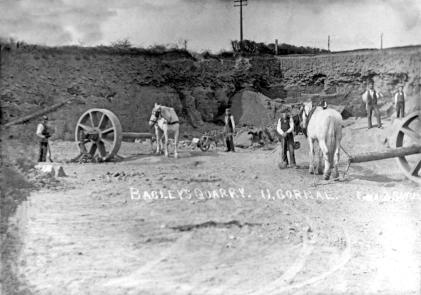
Gornal Limestone is regarded as some of the finest quality in the world
but that didn’t stop the locals from also using it as a scourer to clean
their dirty pots and pans.
•
Removal of Impurities: Iron ore contains various impurities such as
silica (SiO2) and alumina (Al2O3). When limestone (calcium
carbonate - CaCO3) is added to the furnace, it reacts with these
impurities to form slag, which can be easily separated from the iron.
This process helps in purifying the iron ore, producing a higher
quality of iron.
•
Chemical reaction: CaCO3 (limestone) + SiO2 (impurity in iron ore) →
CaSiO3 (slag) + CO2 (carbon dioxide gas)
•
Regulating the Heat: Limestone decomposes in the blast furnace to
form calcium oxide (CaO), which is known as quicklime. This reaction
is endothermic, meaning it absorbs heat. This heat absorption helps
in lowering the overall temperature inside the furnace and prevents
the iron from melting prematurely. It also helps in maintaining a
uniform temperature, allowing for efficient iron production.
•
Chemical reaction: CaCO3 (limestone) → CaO (quicklime) + CO2
(carbon dioxide gas)
•
Slag Formation: The calcium oxide (CaO) formed from limestone
combines with impurities to create slag. Slag is lighter than molten
iron and floats on top of the iron. It acts as a protective layer,
preventing the molten iron from coming into contact with air and
oxidizing. This oxidation can reduce the quality of the iron being
produced, so the slag effectively shields the iron from these effects.
In summary, limestone serves a dual purpose in a blast furnace: it
removes impurities from the iron ore by forming slag and helps regulate
the temperature inside the furnace, ensuring efficient iron production.