Leofric, Earl of Mercia
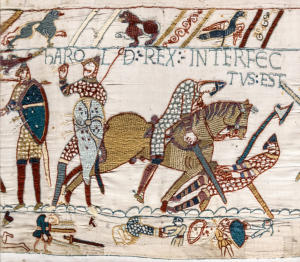
Leofric founded monasteries at Coventry and Much Wenlock and was the husband of Lady Godiva. He was the son of Leofwine, Ealdorman of the Hwicce, who witnessed a charter in 997 for King Æthelred II (Æthelred the Unready). Hwicce was a kingdom in Anglo-Saxon England following the end of Sub-Roman Britain in 449, the kingdom was established in 577, after the Battle of Deorham (now known as Dyrham). Leofric died in 1057 at his estate at Kings Bromley in Staffordshire. Ælfgar, Earl of Mercia He succeeded to his father's title and responsibilities and gained the additional title of Earl of East Anglia, but also was exiled for a time. Through the first marriage of his daughter Edith of Mercia, he became father-in-law to Welsh king Gruffydd ap Llywelyn, a few years after his death, his daughter became a widow and married the English King Harold Godwinson. Edwin, Earl of Mercia He succeeded to his father's title and responsibilities on Ælfgār's death in 1062. His younger brother, Morcar was elected Earl of Northumbria when Tostig Godwinson was ejected by the Northumbrians Battle of Hastings 1066 In 1066 Tostig raided in Mercia but was repulsed by Edwin and Morcar and fled to Scotland. After Harold's death at the Battle of Hastings, where Edwin and Morcar were absent, they were the principal supporters of a new regime under Edgar the Ætheling In 1068, Edwin and Morcar attempted to raise a rebellion in Mercia but swiftly submitted when William moved against them. William the Conqueror replaced Morcar with Copsi. Ansculf de Picquigny Ansculf de Picquigny (c. 1014 – c. 1084) was a French baron who followed William the Conqueror to England. He was the son of Guermond de Picquigny, Picquigny being a village near Amiens in Picardy. Ansculf was awarded by William around 80 manors spread over 11 counties - Berkshire, Buckinghamshire, Hertfordshire, Middlesex, Northamptonshire, Oxfordshire, Rutland, Staffordshire, Surrey, Warwickshire and Worcestershire and made sheriff of Surrey and Buckinghamshire in 1066. Ansculf was granted some of Earl Edwin's lands in the West Midlands, including Dudley following Edwin's attempt to regain control after his brother in law Harold Godwinson died at the Battle of Hastings in 1066. While Earl Edwin was making his way to Scotland he was betrayed by his own retinue to the Normans and killed in 1071. Edwin's lands centred at Gilling West in his brother's Northumbrian earldom, were given to Alain Le Roux Ansculf built the first motte-and-bailey castle at Dudley with a central Keep and surrounding courtyard. William Fitz-Ansculf At the time of the Domesday survey in 1086, the castle was in the possession of Ansculf’s son William fitz Ansculf together with manors in the Home counties and the English Midlands. William inherited many lands in central England that had been granted to his father and made his base at the castle built by his father in Dudley. He and his successors were overlords of the manors of Selly Oak and Birmingham both of which had previously been owned by Wulfwin.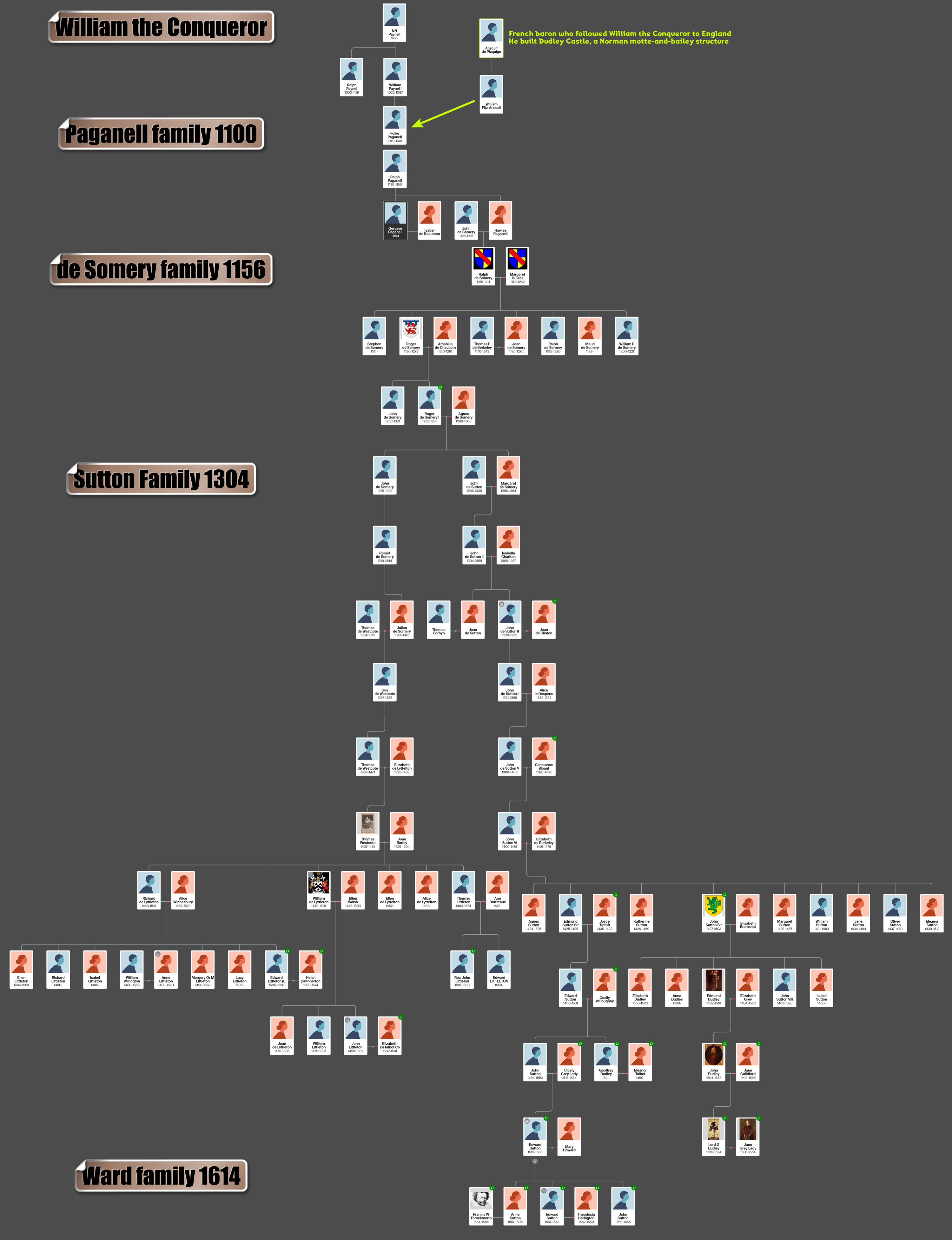
Domesday Book
The Midlands area was known as Mercia between 527 - 918 before becoming part of Wessex (the Kingdom of the West Saxons).
Æthelstan, King of the Anglo-Saxons (son of Edward the Elder and grandson of Alfred the Great) captured York to become the first King of the English.
Following the Norman Conquest in 1066 William the Conqueror ordered the compilation of the Domesday Book in 1086, a survey listing all of the land-holdings in the
England Shires along with their pre-Conquest and current holders.
Domesday Book - William’s Estates
Domesday place name
Modern place name
Owner in 1066
Abinceborne
Abinger, Surrey
King Edward and a huscarl
Belintones
Bellington, Worcestershire
Alric and Holland
Berchelai
Bartley Green, Birmingham
Wulfwin
Bradefelt
Bradfield, Reading
King Edward and Horling
Bradewelle
Bradwell, Milton Keynes
Alric son of Goding, Godwin and Sibbi
Bremingeham
Birmingham
Wulfwin
Caldecote
Caldecote, Buckinghamshire
Four thegns
Catspelle
Chasepool, Staffordshire
Clive
Clyffe Pypard, Wiltshire
Aelfric, Burghelm, and Godiva
Contone
Compton Beauchamp, Berkshire
King Edward and Almer
Dudelei
Dudley
Earl Edwin
Elesberie
Ellesborough, Buckinghamshire
King Edward and Leofnoth, son of Osmund
Escelie
Selly Oak, Birmingham
Wulfwin
Franchelie
Frankley, Worcestershire
Wulfwin
Hadena
Great Hampden and Little Hampden, Buckinghamshire
Archbishop Stigand and Baldwin, son of Herlewin
Honesworde
Handsworth, Birmingham
Alfrith and Alwin
Hingepene
Inkpen, Berkshire
King Edward
Michelham
Mitcham, Surrey
King Edward, Brictric and two men
Mildetone
Milton, Surrey
King Edward and Wulfric
Moleslei
Moseley, Wolverhampton
Countess Godiva
Morve
Morfe and Little Morfe, Staffordshire
Three free men
Nevport
Newport Pagnell, Buckinghamshire
King Edward and Ulf Fenman
Nordfeld
Northfield, Birmingham
Alwold son of Erngeat
Padendene
Paddington, Surrey
King Edward and a huscarl
Pendeford
Pendeford, Wolverhampton
Ulstan and Godwin
Segleslei
Sedgley, Dudley
Earl Algar
Stoche
Bradenstoke, Wiltshire
Strami
Stoches
Stoke Poges, Buckinghamshire
Earl Harold, Tubbi and Sired
Telingham
Tyringham, Buckinghamshire
Aelfeva, wife of Harold; Estan of Farningham, Godric, Godwin the priest, Harold of
Tyringham
Ticheforde
Tickford, Buckinghamshire
Ulf Fenman
Tornelle
Thornhill, Wiltshire
Aelfric, Burghelm and Godiva
Wandesorde
Wandsworth, London
King Edward and six free men
Wamburne
Wombourne, Staffordshire
Thorsten
Wavre
Churchover, Warwickshire
Vagn of Wootton
Willingeuuie
Willingwick, Bromsgrove
Earl Edwin, Alwin, Alwold son of Erngeat, Brictred, Earl Edwin's thane, Erngeat son of
Grim, Frani son of Erngeat
Wlsiestone
Little Woolstone, Milton Keynes
King Edward and Edward the noble
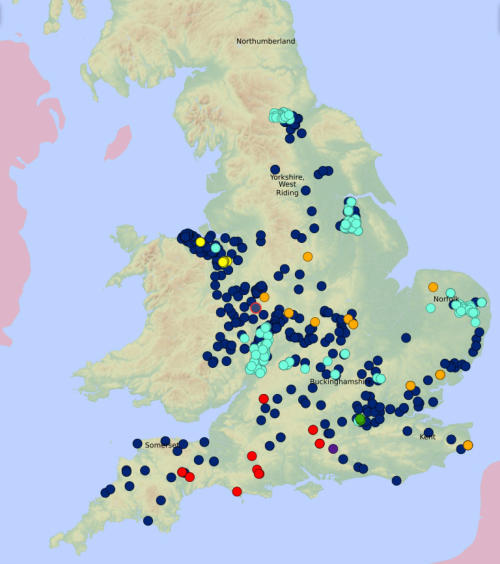
Edwin, Earl of Mercia according to The Prosopography of Anglo-Saxon England (PASE) held the land and properties listed below before William the Conqueror gave them to Ansculf de Picquigny and Alain Le Roux.
- 4.50 hides in Adlington, Cheshire
- 2 hides in Alpraham, Cheshire
- 0.50 hides in Aston in Hawarden, Cheshire
- Property in Axton and Gelli Loveday, Cheshire
- 7 hides in Bettisfield Wales, Cheshire
- Property in Bistre, Leeswood? and Sudfell, Cheshire
- Property in Broncoed, Cheshire
- Property in Bryn, Cwybr, Cefndy in Rhuddlan, Bryn Hedydd, Llewerllyd and Pentre, Cheshire
- Property in Brynford, Halkyn and Ulchenol, Cheshire
- 5 hides in Burwardestone, Cheshire
- Property in Caerwys, Cyrchynen and Llanelwy, Cheshire
- Property in Carn-y-chain and Gwaenysgor, Cheshire
- Property in Chester, Cheshire
- Property in Chester, Cheshire
- Property in Chester, Cheshire
- Property in Chester, Cheshire
- Property in Chester, Cheshire
- Property in Chester, Cheshire
- Property in Chester, Cheshire
- Property in Chester, Cheshire
- Property in Chester, Cheshire
- Property in Chester, Cheshire
- Property in Chester, Cheshire
- Property in Chester, Cheshire
- Property in Chester, Cheshire
- Property in Chester, Cheshire
- Property in Chester, Cheshire
- Property in Chester, Cheshire
- Property in Chester, Cheshire
- Property in Chester, Cheshire
- Property in Chester, Cheshire
- 7 hides in Christleton, Cheshire
- Property in Dincolyn, Rahop and Witestan, Cheshire
- 2 hides in Dodleston Ches., Cheshire
- Property in Dyserth, Bodfari and Ruargor, Cheshire
- 22 hides in Eastham, Cheshire
- 1.50 hides in Eaton, Cheshire
- Property in Englefield, Cheshire
- 4 hides in Farndon, Cheshire
- 3 hides in Frodsham, Cheshire
- Property in Glust, Llys Y Coed in Cilcain, Mechlas in Cilcain, Cheshire
- Property in Greenfield, Cheshire
- Property in Gronant and Golden Grove, Cheshire
- Property in Gwysaney, Cheshire
- 1 hide in Hadlow in Neston, Cheshire
- 3 hides, 0.50 carucates in Hawarden, Cheshire
- Property in Hendrebifa in Mold, Weltune, Munentone, Horespol and Mulintone, Cheshire
- Property in Hiraddug and Pengdeslion, Cheshire
- Property in Inglecroft, Brynford and Halkyn, Cheshire
- 0.50 hides in Llys Eadwine?, Cheshire
- 2 hides in Macclesfield, Cheshire
- Property in Maen Efa, Cil Owen, Dyserth, and Bodeugan, Cheshire
- 8 hides in Malpas, Cheshire
- Property in Meincatis, Trefraith and Marian Trefedwen?, Cheshire
- Property in Mertyn, Calcoed and Whitford, Cheshire
- Property in Middlewich, Cheshire
- Property in Mostyn, Cheshire
- Property in Mulintone and Wiselei, Cheshire
- Property in Nantwich, Cheshire
- Property in Northwich, Cheshire
- Property in Picton and Melchanestone, Cheshire
- Property in Prestatyn and Meliden, Cheshire
- 1 hide in Radington, Cheshire
- Property in Rhos Ithel?, Cheshire
- Property in Rhuddlan, Cheshire
- Property in Rhuddlan, Bryn, Llewerllyd, Pengeors in Rhuddlan, Rhydorddwy, Tredueng and Cwybr Bach, Cheshire
- Property in Tan-y-Fron?, Kelston and Gwespyr, Cheshire
- 4 hides in Tilston, Cheshire
- Property in Trelawnyd, Cheshire
- Property in Trellyniau and Ysceifiog, Cheshire
- 4.50 hides in Upton in Chester, Cheshire
- 13 hides, 1 virgate in Weaverham, Cheshire
- Property in Wenfesne, Cheshire
- Property in Whitford and Bychton, Cheshire
- Property in Widhulde, The Blorant, Bryngwyn, and Tremeirchion, Cheshire
- 5 hides in Worthenbury Wales, Cheshire
- 4 carucates in Doveridge, Derbyshire
- 2 carucates in Wyaston and Edlaston, Derbyshire
- 5 hides in Suckley, Herefordshire
- 1 carucate in Aisby in Corringham, Lincolnshire
- 1 carucate in Ashby, Lincolnshire
- 13 bovates in Ashby in Scunthorpe, Lincolnshire
- 3 carucates in Blyton, Lincolnshire
- 2 carucates in Bottesford, Lincolnshire
- 5 carucates in Brumby in Scunthorpe, Lincolnshire
- 1 carucate in Corringham, Lincolnshire
- 6 carucates, 2.50 bovates in Glentworth, Lincolnshire
- 4 carucates in Grayingham, Lincolnshire
- 2 carucates in Grayingham, Lincolnshire
- 2 carucates, 6.50 bovates in Harpswell, Lincolnshire
- 2.50 carucates in Heapham, Lincolnshire
- 4 carucates, 2 bovates in Hemswell, Lincolnshire
- 2.50 carucates in Hibaldstow, Lincolnshire
- Property in Hibaldstow, Lincolnshire
- 8 carucates in Kirton in Lindsey, Lincolnshire
- 9 bovates in Morton in Gainsborough, Lincolnshire
- 2 carucates in Northorpe near Kirton in Lindsey, Lincolnshire
- 1 carucate in Pilham, Lincolnshire
- 9 bovates in Redbourne, Lincolnshire
- 1 carucate in Saxby, Lincolnshire
- 3 carucates, 6 bovates in Scunthorpe, Lincolnshire
- 4 bovates in Snitterby, Lincolnshire
- 2 carucates in Somerby in Corringham, Lincolnshire
- 0.50 carucates in Springthorpe, Lincolnshire
- 6 carucates in Springthorpe and Corringham, Lincolnshire
- 6 bovates in Stainton in Waddingham, Lincolnshire
- Property in Thealby, Derby in Burton upon Stather, Burton upon Stather, Lincolnshire
- 4 carucates in Winterton, Lincolnshire
- 1 carucate in Yaddlesthorpe, Lincolnshire
- 34.50 hides in Bloxham and Adderbury, Oxfordshire
- 5 hides in Chelmarsh, Shropshire
- 1.50 hides in Crudgington, Shropshire
- 12 hides in Ditton Priors, Shropshire
- 1 hide in Dodington, Shropshire
- 3 hides in Donington, Shropshire
- 4.50 hides in Ellesmere, Shropshire
- 9 hides in Emstrey, Shropshire
- 15 hides in Ford, Shropshire
- 7 hides in High Ercall, Shropshire
- 6 hides in Longford, Shropshire
- 1 hide in Puleston, Shropshire
- 9 hides in Stottesdon, Shropshire
- 8 hides in Stretton, Shropshire
- 14 hides in Wellington, Shropshire
- 7 hides in Wykey, Shropshire
- 1 hide in Alstone, Staffordshire
- 2 hides in Apeton, Staffordshire
- 1 hide in Barton, Staffordshire
- 2 hides in Billington, Staffordshire
- 1 hide in Bradley, Staffordshire
- 2.50 hides in Burton, Staffordshire
- 1 hide in Littywood, Staffordshire
- 1 hide in Longnor, Staffordshire
- 2 hides in Mitton, Staffordshire
- 1 hide in Monetville, Staffordshire
- 2.50 hides in Rickerscote, Staffordshire
- 1 hide in Silfmore, Staffordshire
- 2 hides in Woollaston, Staffordshire
- 8 hides in Aston, Warwickshire
- 4 hides in Bedworth, Warwickshire
- 46 hides in Brailes, Warwickshire
- 8 urban tenements in Warwick, Warwickshire
- 1 hide in Coten, Warwickshire
- 3 hides in Erdington, Warwickshire
- 1 hide in Myton, Warwickshire
- 2 hides in Myton, Warwickshire
- 8 hides, 1 virgate in Sutton Coldfield, Warwickshire
- 8 hides in Ulverley, Warwickshire
- 24 hides in [Long] Itchington, Warwickshire
- 1 hide in [Old] Arley, Warwickshire
- 30 hides in Bromsgrove, Worcestershire
- Property in Droitwich, Worcestershire
- 1 hide in Dudley, Worcestershire
- 5 hides in Suckley, Worcestershire
- Property in Worcester, Worcestershire
- 11 hides in Wychbold, Worcestershire
- 8 carucates in Askham Bryan, Yorkshire
- 6 carucates in Bolton Abbey, Yorkshire
- 10 carucates in Catterick, Yorkshire
- 4 carucates in Gilling, Yorkshire
- 10 carucates in Hooton Pagnell and Bilham, Yorkshire
- 18 carucates in Kippax and Ledston, Yorkshire
- 18 carucates in Laughton-en-le-Morthern and Throapham, Yorkshire
- 44 carucates in Northallerton, Yorkshire






Leofric, Earl of Mercia
Leofric founded monasteries at Coventry and Much Wenlock and was the husband of Lady Godiva. He was the son of Leofwine, Ealdorman of the Hwicce, who witnessed a charter in 997 for King Æthelred II (Æthelred the Unready). Hwicce was a kingdom in Anglo-Saxon England following the end of Sub-Roman Britain in 449, the kingdom was established in 577, after the Battle of Deorham (now known as Dyrham). Leofric died in 1057 at his estate at Kings Bromley in Staffordshire. Ælfgar, Earl of Mercia He succeeded to his father's title and responsibilities and gained the additional title of Earl of East Anglia, but also was exiled for a time. Through the first marriage of his daughter Edith of Mercia, he became father-in-law to Welsh king Gruffydd ap Llywelyn, a few years after his death, his daughter became a widow and married the English King Harold Godwinson. Edwin, Earl of Mercia He succeeded to his father's title and responsibilities on Ælfgār's death in 1062. His younger brother, Morcar was elected Earl of Northumbria when Tostig Godwinson was ejected by the Northumbrians Battle of Hastings 1066 In 1066 Tostig raided in Mercia but was repulsed by Edwin and Morcar and fled to Scotland. After Harold's death at the Battle of Hastings, where Edwin and Morcar were absent, they were the principal supporters of a new regime under Edgar the Ætheling In 1068, Edwin and Morcar attempted to raise a rebellion in Mercia but swiftly submitted when William moved against them. William the Conqueror replaced Morcar with Copsi. Ansculf de Picquigny Ansculf de Picquigny (c. 1014 – c. 1084) was a French baron who followed William the Conqueror to England. He was the son of Guermond de Picquigny, Picquigny being a village near Amiens in Picardy. Ansculf was awarded by William around 80 manors spread over 11 counties - Berkshire, Buckinghamshire, Hertfordshire, Middlesex, Northamptonshire, Oxfordshire, Rutland, Staffordshire, Surrey, Warwickshire and Worcestershire and made sheriff of Surrey and Buckinghamshire in 1066. Ansculf was granted some of Earl Edwin's lands in the West Midlands, including Dudley following Edwin's attempt to regain control after his brother in law Harold Godwinson died at the Battle of Hastings in 1066. While Earl Edwin was making his way to Scotland he was betrayed by his own retinue to the Normans and killed in 1071. Edwin's lands centred at Gilling West in his brother's Northumbrian earldom, were given to Alain Le Roux Ansculf built the first motte-and-bailey castle at Dudley with a central Keep and surrounding courtyard. William Fitz-Ansculf At the time of the Domesday survey in 1086, the castle was in the possession of Ansculf’s son William fitz Ansculf together with manors in the Home counties and the English Midlands. William inherited many lands in central England that had been granted to his father and made his base at the castle built by his father in Dudley. He and his successors were overlords of the manors of Selly Oak and Birmingham both of which had previously been owned by Wulfwin.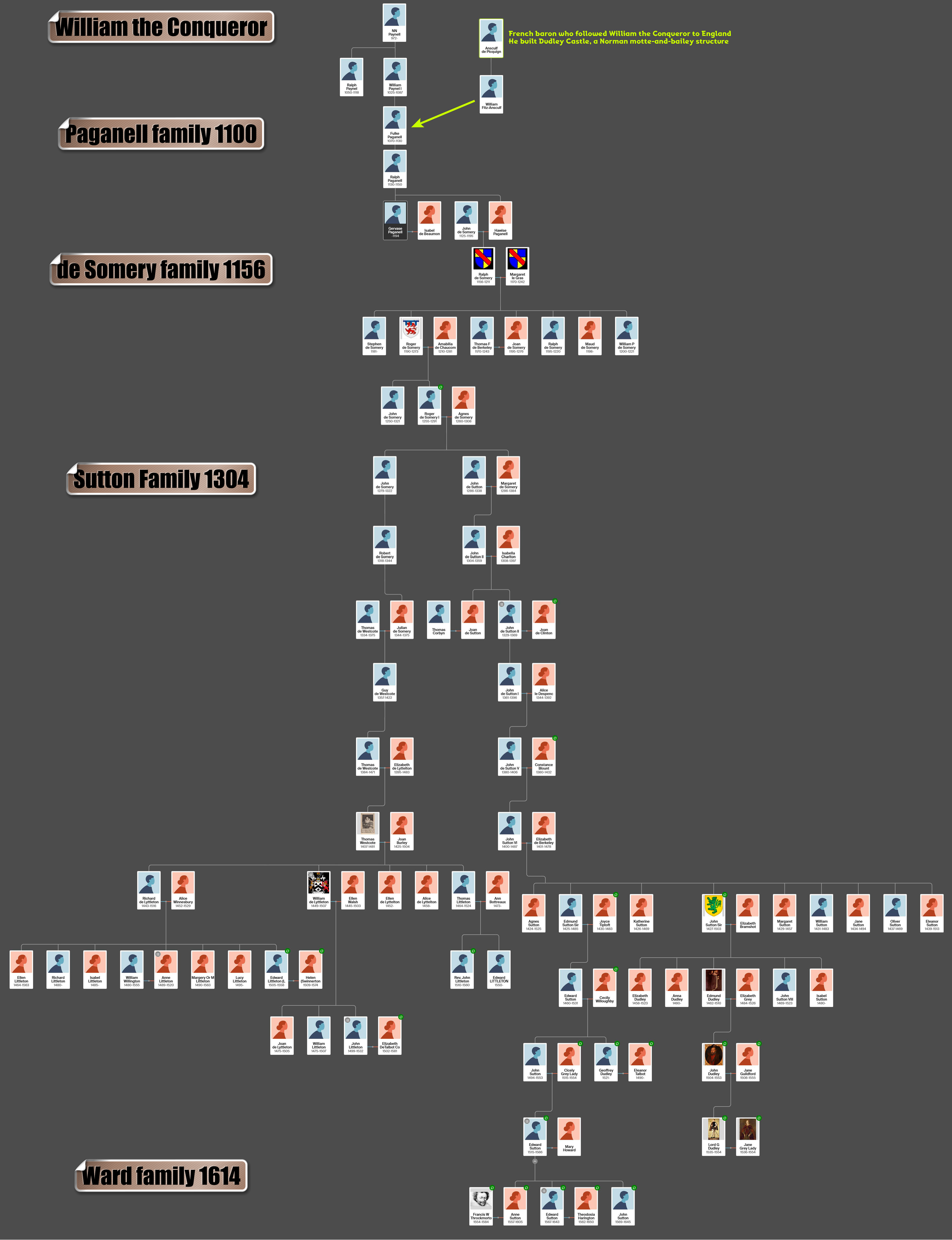
Domesday Book
The Midlands area was known as Mercia between 527 - 918 before
becoming part of Wessex (the Kingdom of the West Saxons).
Æthelstan, King of the Anglo-Saxons (son of Edward the Elder and
grandson of Alfred the Great) captured York to become the first King of
the English.
Following the Norman Conquest in 1066 William the Conqueror ordered
the compilation of the Domesday Book in 1086, a survey listing all of the
land-holdings in the England Shires along with their pre-Conquest and
current holders.
Domesday Book - William’s Estates
Domesday place name
Modern place name
Owner in 1066
Abinceborne
Abinger, Surrey
King Edward and a huscarl
Belintones
Bellington, Worcestershire
Alric and Holland
Berchelai
Bartley Green, Birmingham
Wulfwin
Bradefelt
Bradfield, Reading
King Edward and Horling
Bradewelle
Bradwell, Milton Keynes
Alric son of Goding, Godwin and Sibbi
Bremingeham
Birmingham
Wulfwin
Caldecote
Caldecote, Buckinghamshire
Four thegns
Catspelle
Chasepool, Staffordshire
Clive
Clyffe Pypard, Wiltshire
Aelfric, Burghelm, and Godiva
Contone
Compton Beauchamp, Berkshire
King Edward and Almer
Dudelei
Dudley
Earl Edwin
Elesberie
Ellesborough, Buckinghamshire
King Edward and Leofnoth, son of Osmund
Escelie
Selly Oak, Birmingham
Wulfwin
Franchelie
Frankley, Worcestershire
Wulfwin
Hadena
Great Hampden and Little Hampden, Buckinghamshire
Archbishop Stigand and Baldwin, son of Herlewin
Honesworde
Handsworth, Birmingham
Alfrith and Alwin
Hingepene
Inkpen, Berkshire
King Edward
Michelham
Mitcham, Surrey
King Edward, Brictric and two men
Mildetone
Milton, Surrey
King Edward and Wulfric
Moleslei
Moseley, Wolverhampton
Countess Godiva
Morve
Morfe and Little Morfe, Staffordshire
Three free men
Nevport
Newport Pagnell, Buckinghamshire
King Edward and Ulf Fenman
Nordfeld
Northfield, Birmingham
Alwold son of Erngeat
Padendene
Paddington, Surrey
King Edward and a huscarl
Pendeford
Pendeford, Wolverhampton
Ulstan and Godwin
Segleslei
Sedgley, Dudley
Earl Algar
Stoche
Bradenstoke, Wiltshire
Strami
Stoches
Stoke Poges, Buckinghamshire
Earl Harold, Tubbi and Sired
Telingham
Tyringham, Buckinghamshire
Aelfeva, wife of Harold; Estan of Farningham, Godric, Godwin the priest, Harold of
Tyringham
Ticheforde
Tickford, Buckinghamshire
Ulf Fenman
Tornelle
Thornhill, Wiltshire
Aelfric, Burghelm and Godiva
Wandesorde
Wandsworth, London
King Edward and six free men
Wamburne
Wombourne, Staffordshire
Thorsten
Wavre
Churchover, Warwickshire
Vagn of Wootton
Willingeuuie
Willingwick, Bromsgrove
Earl Edwin, Alwin, Alwold son of Erngeat, Brictred, Earl Edwin's thane, Erngeat son of
Grim, Frani son of Erngeat
Wlsiestone
Little Woolstone, Milton Keynes
King Edward and Edward the noble


- News
- Bookings
- History
- Galleries
- The Area
- The Mill
- Friends
- Contact
