History
The area around Gornal has a long and interesting history and it has been claimed that it was the people of Gornal that constructed Dudley Castle. There have been many Royal connections over the years with Dudley and Sedgley owned by Ælfgar, Earl of Mercia and then his son Edwin until 1066 when William the Conqueror gave their lands to Ansculf de Picquigny. In 1066 Sedgley had households of 45 villagers, 2 smallholders, 3 slaves and 1 priest. There were 12 ploughlands, 1 lord's plough team, 18 men's plough teams with other resources of Meadow (16 acres) & Woodland (2 * 1 leagues). The annual value to the lord was 10 pounds in 1066. Sedgley was a settlement listed in the Domesday Book, in the hundred of Seisdon and the county of Staffordshire. It had a recorded population of 60 households in 1086, putting it in the largest 20% of settlements recorded in Domesday, and is listed under 2 owners in the Domesday Book. Even the birth of the Industrial Revolution is linked to the area, Abraham Darby who in 1709 produced the World’s first successful blast furnace in Coalbrookdale was born just a mile away in Wren’s Nest and his great grand uncle Dud Dudley, who started the Industrial Revolution born at Himley Hall in 1599. By 1834 Benjamin Gibbons, an ironmaster had developed fire-clay mines at Sedgley and built the fireclay works at Deepdale Lane with Gibbons firebricks becoming the World’s finest quality bricks for use in furnaces. Benjamin’s son, William Pike Gibbons William who continued the firebrick & gas retort business lived in Ruiton House, Vale Street, opposite the new windmill - one of the oldest houses in Gornal dating back to the 1700’s. William became a Justice of the Peace and in 1898 became a Freemason at the United Grand Lodge of England in Covent Garden. He moved to the Foxhills mansion house on the edge of the Himley estate before retiring to Torquay.Old Windmills
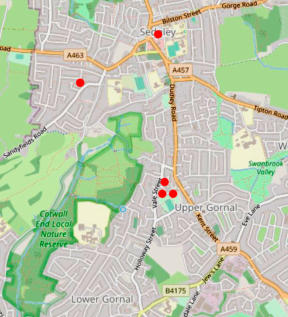
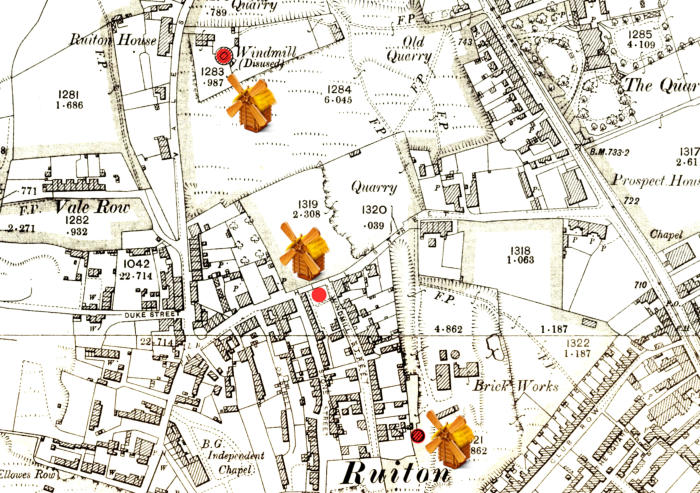
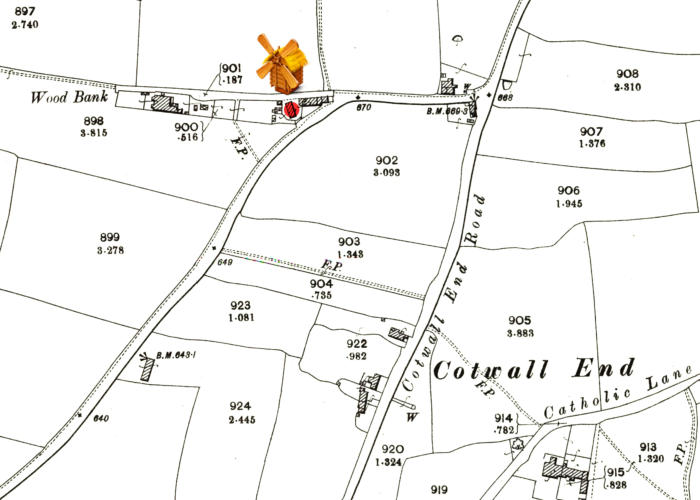
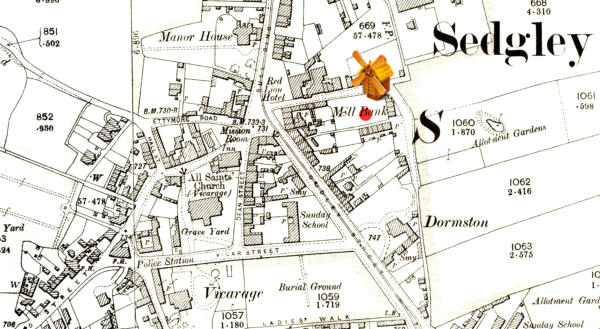
Timber windmills existed in Upper Gornal up until a windmill built of local stone dating back to the 17th Century stood at Ruiton, then known as Rewardine. There were potentially five Mills in the area although it’s not known whether the building known as the Round House was ever actually a windmill. The original location was at Mill Street (Now Windmill Street) close to where the Old Mill Inn now stands. The windmill was owned by Peter Persehouse who sold it to Thomas Maulin of Upper Gornal, then known as Overgornal, in 1702. The mill was leased to local millers. In 1759, Job Maulin sold the windmill to William Woodward of Bloxwich and John Lees of Walsall who later sold it on to Samuel Fereday of Upper Gornal. Samuel transferred ownership to his farmer son (also named Samuel) in 1790. Presumably the same Samuel Feredey that owned Ellowes Hall. He sold it to Thomas Turner and Benjamin Lloyd in 1795 who in turn passed it on to William Richmond in 1805.New Windmill
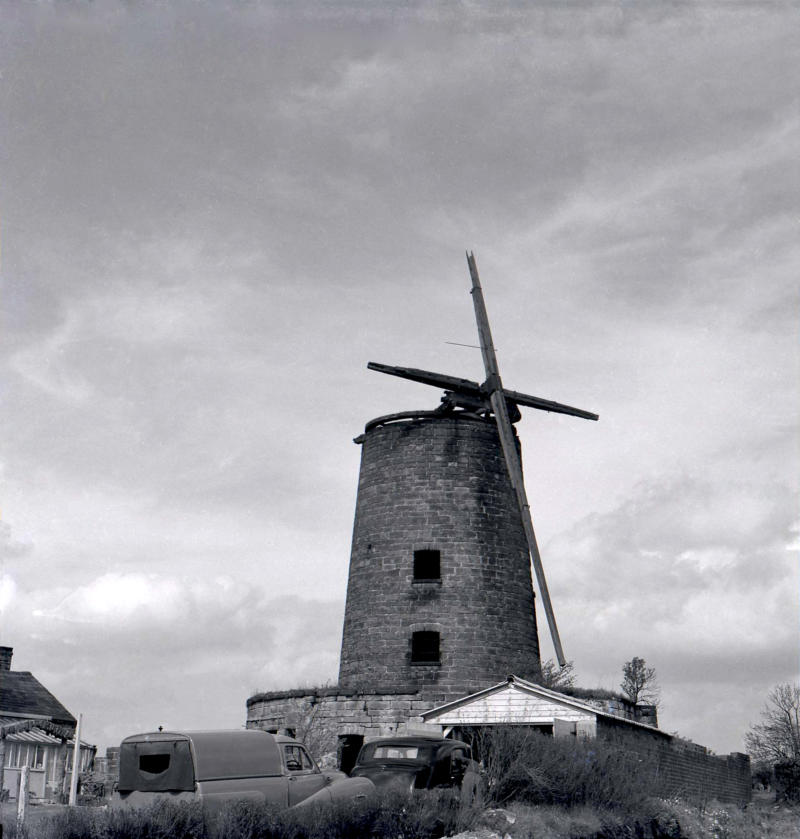
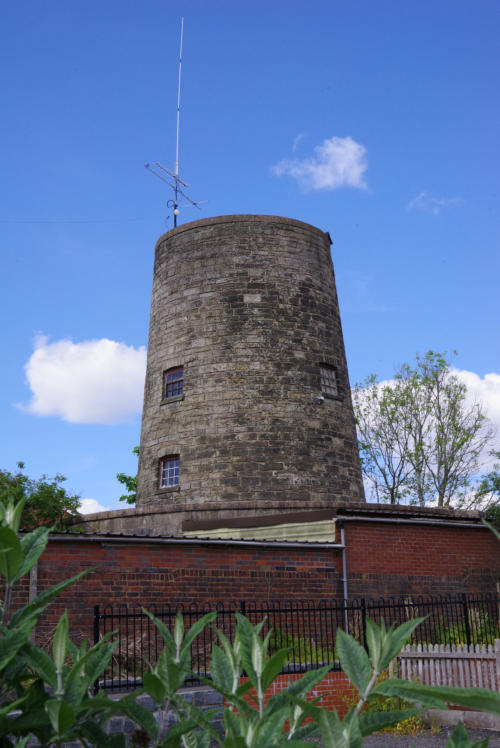
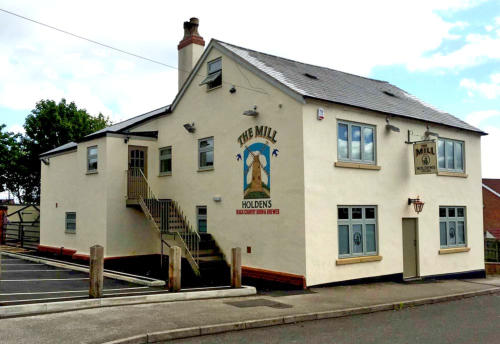
The new sandstone windmill built in 1830 from local quarry stone was built for flour production by George Richmond, a local baker and member of the chapel. It was capable of grinding 120 bags of corn a week. The mill is a Tower Mill design where the cap is the only part of the mill which turns to face the wind. There were four large sails attached to the cap which drove a cast iron centre post turning the three large mill stones on the ground floor. The step at the main entrance is one of the original grindstones. Sadly the sails and cap are no longer in existence and the mill was capped with concrete. By 1844 the new mill was owned by Holyoak & Co. and became a mill to grind stone to produce sand.Mill Timeline
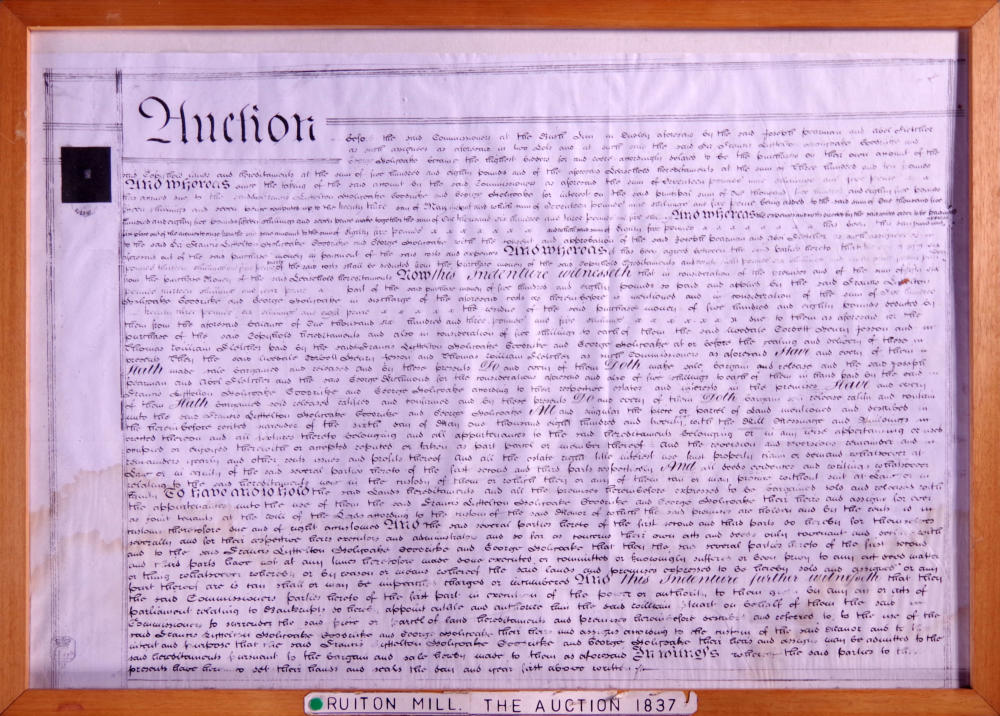
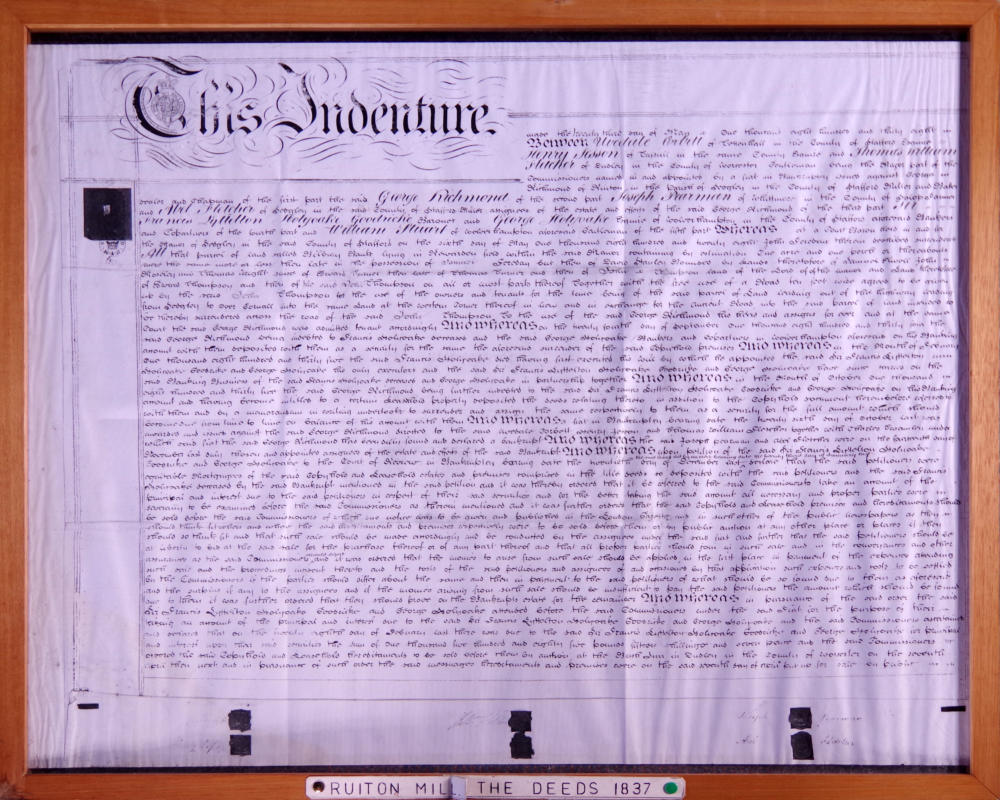
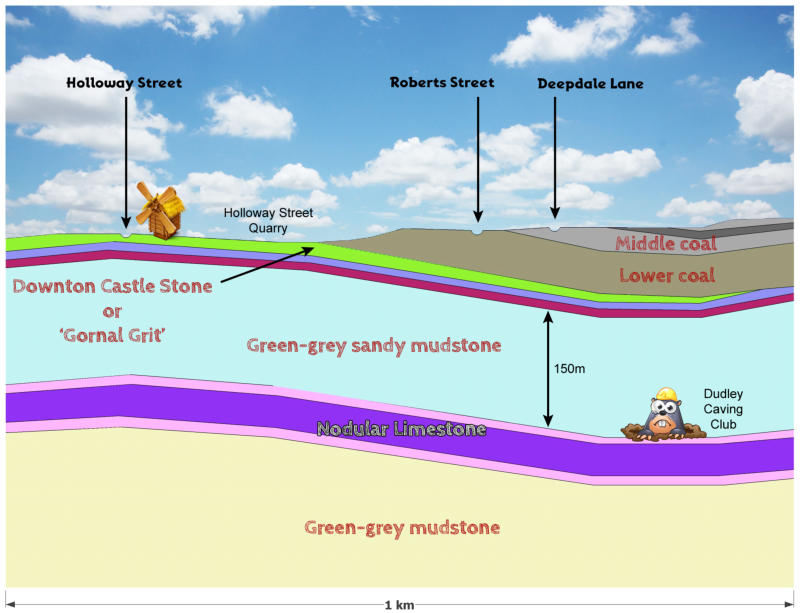
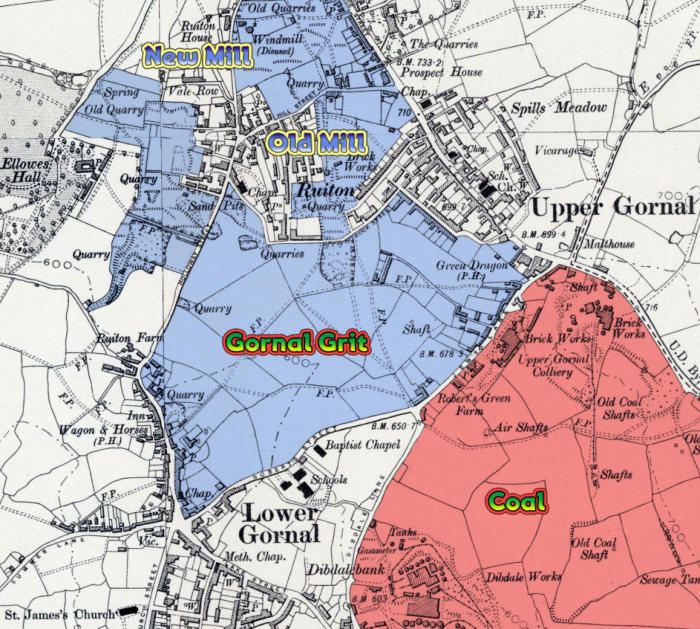
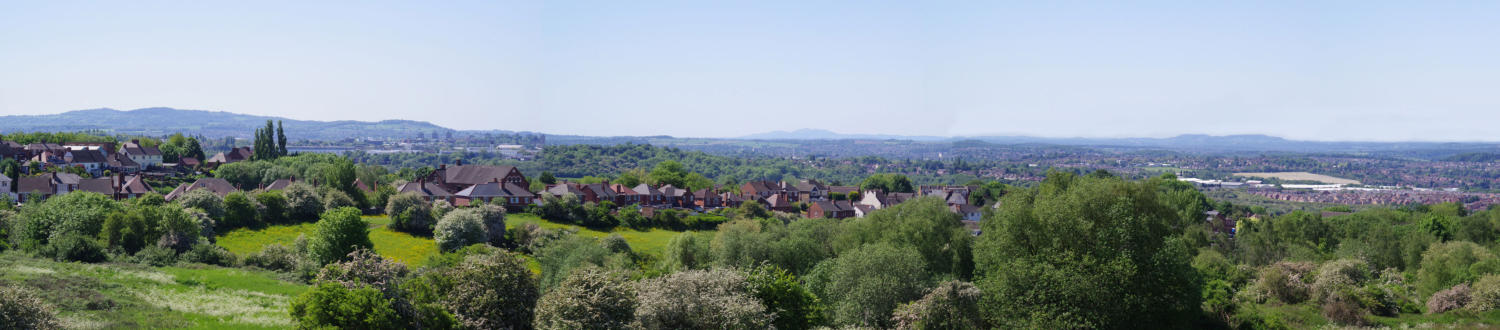
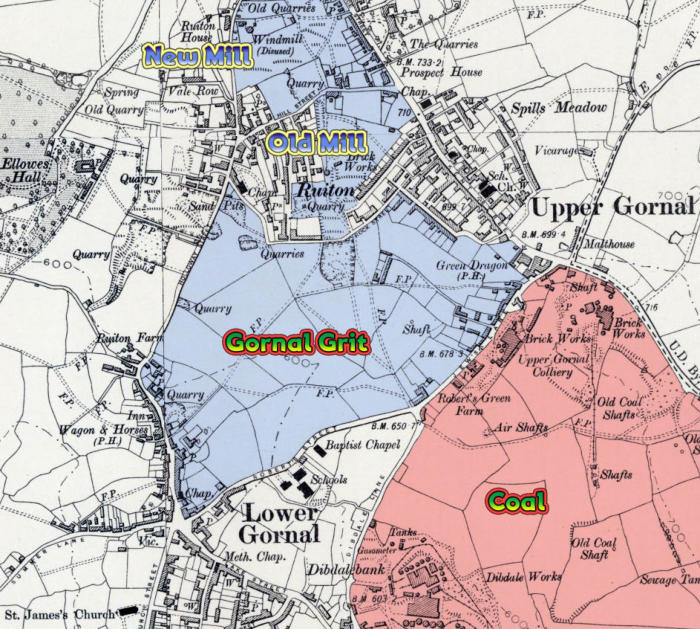
At this time, with children as young as nine years old still working down mines and in manufacturing ironworks, many of the poor, the old, the sick and the infirm ended up living in Workhouses The new Dudley Union Workhouse (which later became Burton Road Hospital) was built in 1856 and by 1881 housed 754 residents. Apart from paupers, there were also people admitted with handicaps and included amongst those recorded as deaf, dumb and/or blind others were listed as Lunatic, idiot & imbecile. The original builder of the new windmill George Richmond went bankrupt in 1837. The history timeline of the mill is based around George who after his bankruptcy became a pawnbroker in Gornal before emigrating to the United States. The mills were put up for auction again and it was George's daughter Amelia Fletcher Richmond who took ownership with her husband Paul Thompson who was either already a miller or became one. By 1841 Hannah and the family had moved to Lions Wharf in Halesowen (now known as Hawne Basin), possibly on a canal barge as there was very little housing as the area was a loading area for bricks, pipes and tiles on the Dudley No.2 canal. George had presumably made the initial move to America. At least five of George and Hannah’s children followed them to the States with Abel arriving from Liverpool to New York on 22nd August 1855 The geology of Gornal had not only good quality coal but also the finest quality sandstone. Most of the coalfields were owned by William Ward, 1st Earl of Dudley, and Georgina, daughter of Sir Thomas Moncrieff, 7th Baronet. He died in 1885 and left nearly 30,000 acres (120 km2) of mineral deposits in Staffordshire and Worcestershire, two hundred coal and iron mines, several iron works (including the Round Oak Steelworks) along with Himley Hall and Dudley Castle and a substantial fortune, as well as the Earldom to his son, William Humble Ward, 2nd Earl of Dudley. There were a number of quarries for Gornal stone, Harper's Quarry was located between the mill and Ellowes Hall, to the West of Vale Street and now Old Quarry Drive housing estate. Rollason's Quarry was located to the East of Holloway Street and below Hermit Street. This is still open land with some stunning views from Hermit Street of the Clent, Malvern, Clee and Wrekin Hills along with the Welsh mountains on a very clear day. The Stone is Downton Castle Sandstone Formation (known locally as the Gornal Grit). Gornal Grit, a type of sedimentary sandstone bedrock laid down in a river delta 419 to 424 million years ago in the Silurian Period, the local environment previously dominated by shallow seas. It is one of the hardest and most durable rock types found anywhere in the Black Country. As a result, it was widely employed as a building stone in the local area – and can still be seen in numerous 19th century walls and churches. Sandstone was both the literal and metaphorical bedrock of GornalThe Gornal Fish
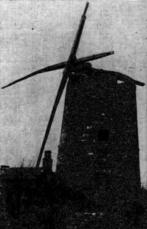
These sedimentary rocks are shallow-marine in origin. They are detrital, ranging from coarse to fine grained (locally with some carbonate content) forming interbedded sequences. At Rollason’s quarry, a remarkable discovery was made in the mid-20th century: an exquisitely preserved fossil fish unlike anything alive today, around 10cm in length with a broad, bony headshield and no jaw. The Gornal fish (Hemicyclaspis murchisoni) is a truly noteworthy and unique fossil. Although fragmented remains of this and other fossil fish have been recovered from the Gornal quarries, no other fossil this well preserved was ever unearthed. The sand produced was used for both industrial and for domestic purposes, such as scrubbing dirty pans and coating floorboards. In 1877 a violent storm damaged the sails along with several other buildings in Gornal and the mill fell into a poor state of repair and was no longer used for milling. On the 11th August 1950 the mill was granted listed building status along with the mill cottages, the cottages are in private ownership and the mill was taken over by the Local Authority. The sails, spars and gearing were removed in 1958 and by 1962 three floors were added along with a concrete cap. The building was then used by local scout groups. Dudley Caving Club meet in the mill on Thursdays with Dudley & District Amateur Radio Society meeting on Tuesdays. The mill is available at other times for the local community to hire, please see the Bookings page for availability.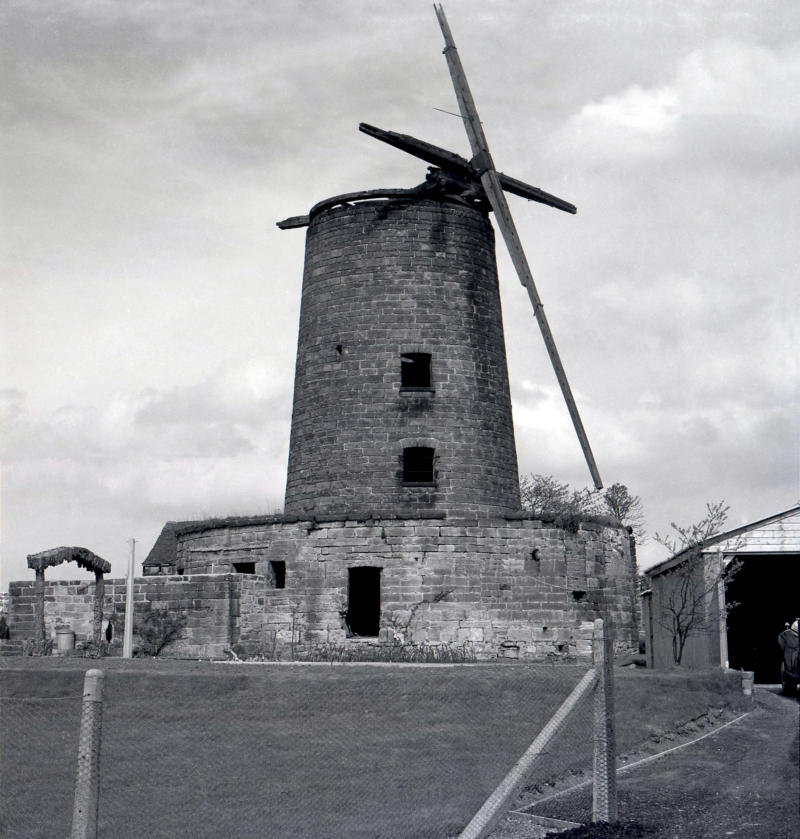
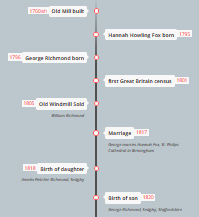
The first Great Britain census was taken in 1801 covering England, Scotland and Wales but the first three were largely taken on behalf of the
population rather than being a record of individuals.
The fourth census of was taken on Monday 30th May 1831. The returns gave a population of 16.54 million people, an increase of 1.9 million
over 1821.
Finding out details of Ruiton's Windmills before than date is sketchy to say the least and between 1830 and 1872 both windmills existed so
it's safe to assume that two branches of the Richmond family lived in the mills.
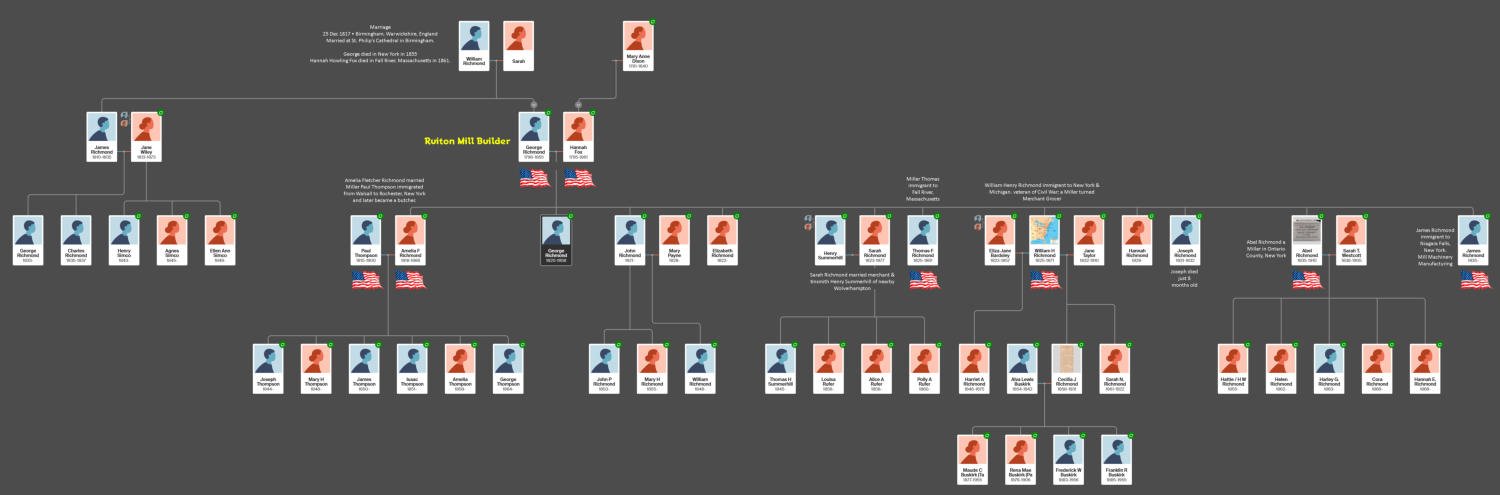
William & Sarah Richmond who bought the Old Mill in 1805 had at least two sons. George was born in 1796 and James in 1810
James only lived to the age of 25 by which time he had married Jane Wiley from Wolverhampton at St. Bartholomew in Edgbaston on 13th January 1833. They had two sons,
George born on 30th April 1833 and Charles born on the 6th August 1835 however Charles died at the age of two just two years after his father James. They married when Jane
was already pregnant with George and presumably knew that James was unwell. Jane went on to marry Henry Simco, a surgeon who she possibly met treating her husband.
Both George & Charles were baptised at the same time in 1835 presumably after their father had died as two year old George was living in the old mill but baby Charles was
living with Jane's mother in Barr Street, Gornal village
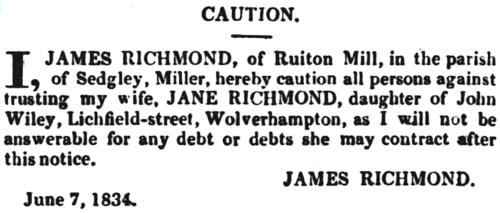
There was trouble at t’ mill around this time as James decided to write to the
Wolverhampton Chronicle to warn people about his wife’s spending habits.
James died just months after his son was born and was buried at St. Mary's in Walsall,
Charles died just two years later on the 31st December 1837 aged just 2 years and 5
months. It is somewhat strange that James died just twelve months after writing to the
paper and that Jane got pregnant just five months after the letter. Was James unwell or
did he die suddenly? Was Charles actually Henry Simco's son? We'll probably never know!
By the 1841 census baby George was living with Jane's mother Elizabeth in St. Georges, Edgbaston and Jane had moved to Liverpool with
Henry Simco. They had two children, Henry in 1843 and Agnes in 1845 before marrying and having a further daughter, Ellen Ann in 1849
before Jane’s second husband died at the age of 41 in 1854
George & Hannah Richmond had eleven children and by 1830 had moved into the new mill further up Ruiton Hill. They were married in 1817
at St. Philip’s Cathedral in Birmingham although at that time it was still a church before being made a cathedral in 1905.
Four sons become millers, one son manufactured mill machinery and Amelia Fletcher Richmond married Paul Thompson who was either a miller or became one.
The final owner of the old mill Edward Jones bought the building in 1861 and it remained in his possession until it finally collapsed due to poor condition and subsidence in
1872




MILL LOCATIONS

History
A windmill built of local stone dating back to the 17th Century stood at Ruiton, then known as Rewardine. The original location was at Mill Street (Now Windmill Street) close to where the Old Mill Inn now stands. The windmill was owned by Peter Persehouse who sold it to Thomas Maulin of Upper Gornal, then known as Overgornal, in 1702. The mill was leased to local millers. In 1759, Job Maulin sold the windmill to William Woodward of Bloxwich and John Lees of Walsall who later sold it on to Samuel Fereday of Upper Gornal. Samuel transferred ownership to his farmer son (also named Samuel) in 1790. He sold it to Thomas Turner and Benjamin Lloyd in 1795 who in turn passed it on to William Richmond in 1805. In 1830 William's son George built a new windmill in nearby Vale Street and by 1835 had taken ownership of the old mill, however the large expenditure forced George into bankruptcy in 1837 The final owner of the mill Edward Jones bought the building in 1861 and it remained in his possession until it finally collapsed due to poor condition and subsidence in 1872New Windmill
The new sandstone windmill built in 1830 from local quarry stone was built for flour production by George Richmond, a local baker and was capable of grinding 120 bags of corn a week. By 1844 the new mill was owned by Holyoak & Co. and became a mill to grind stone to produce sand. The geology of Gornal had not only good quality coal but also the finest quality sandstone. Most of the coalfields were owned by William Ward, 1st Earl of Dudley, and Georgina, daughter of Sir Thomas Moncrieff, 7th Baronet. He died in 1885 and left nearly 30,000 acres (120 km2) of mineral deposits in Staffordshire and Worcestershire, two hundred coal and iron mines, several iron works (including the Round Oak Steelworks) along with Himley Hall and Dudley Castle and a substantial fortune, as well as the Earldom to his son, William Humble Ward, 2nd Earl of Dudley. There were a number of quarries for Gornal stone, Harper's Quarry was located between the mill and Ellowes Hall, to the West of Vale Street and now Old Quarry Drive housing estate. Rollason's Quarry was located to the East of Holloway Street and below Hermit Street. This is still open land with some stunning views from Hermit Street of the Clent, Malvern, Clee and Wrekin Hills along with the Welsh mountains on a very clear day. The Stone is Downton Castle Sandstone Formation (known locally as the Gornal Grit). Gornal Grit, a type of sedimentary sandstone bedrock laid down in a river delta 419 to 424 million years ago in the Silurian Period, the local environment previously dominated by shallow seas. It is one of the hardest and most durable rock types found anywhere in the Black Country. As a result, it was widely employed as a building stone in the local area – and can still be seen in numerous 19th century walls and churches. Sandstone was both the literal and metaphorical bedrock of Gornal These sedimentary rocks are shallow-marine in origin. They are detrital, ranging from coarse to fine grained (locally with some carbonate content) forming interbedded sequences. At Rollason’s quarry, a remarkable discovery was made in the mid-20th century: an exquisitely preserved fossil fish unlike anything alive today, around 10cm in length with a broad, bony headshield and no jaw. The Gornal fish (Hemicyclaspis murchisoni) is a truly noteworthy and unique fossil. Although fragmented remains of this and other fossil fish have been recovered from the Gornal quarries, no other fossil this well preserved was ever unearthed. The sand produced was used for both industrial and for domestic purposes, such as scrubbing dirty pans and coating floorboards. In 1877 a violent storm damaged the sails along with several other buildings in Gornal and the mill fell into a poor state of repair and was no longer used for milling. On the 11th August 1950 the mill was granted listed building status along with the mill cottages, the cottages are in private ownership and the mill was taken over by the Local Authority. The sails, spars and gearing were removed in 1958 and by 1962 three floors were added along with a concrete cap. The building was then used by local scout groups. Dudley Caving Club meet in the mill on Thursdays with Dudley & District Amateur Radio Society meeting on Tuesdays. The mill is available at other times for the local community to hire, please see the Bookings page for availability.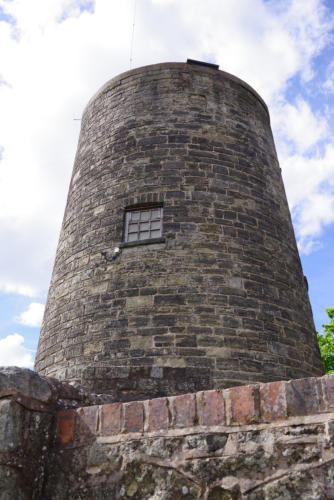



- News
- Bookings
- History
- Galleries
- The Area
- The Mill
- Friends
- Contact
