Canals
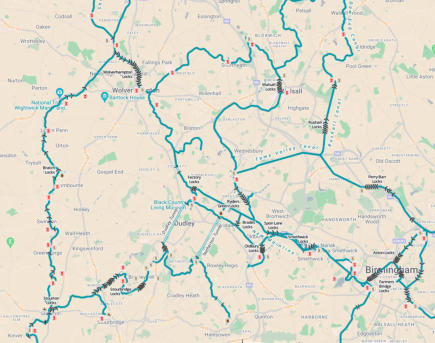
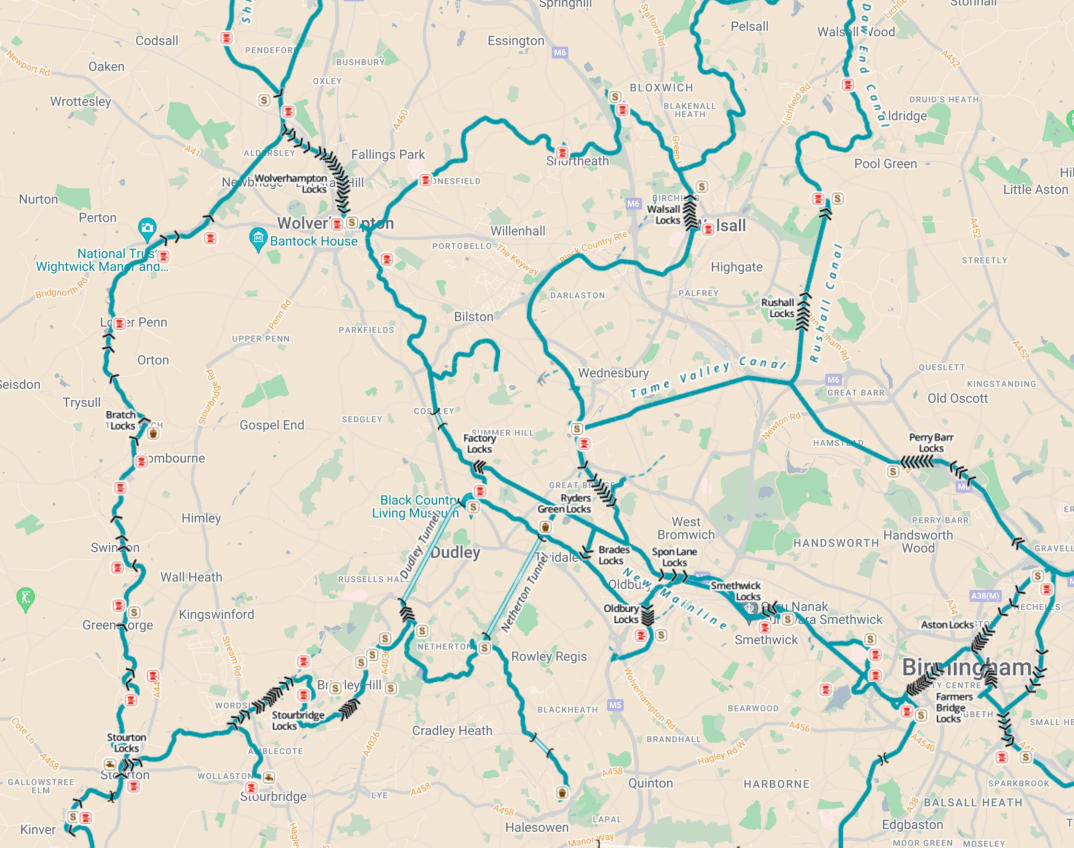
Although Ruiton Mill is not adjacent to a canal, which is to be expected at the top of a hill, we are very close and
surrounded by the world’s foremost canal system all interlinked with the Industrial Revolution and mining prevalent in
the Black Country area.
Our nearest canal is actually underground, Lord Dudley and Ward's branch canal terminated at Wren’s Nest. Built in 1775
to transfer the spoils from the Earl of Dudley’s limestone workings to the Birmingham Canal’s Old Main Line at Tipton.
These canals enabled the Black Country area to prosper giving access to all parts of the country via the Shropshire Union
to North Wales, the Trent & Mersey to the Northwest and Lincolnshire, the Grand Union to London and Oxford and the
Staffordshire & Worcestershire to the Southwest.
The Black Country canal system, once one of the busiest in Europe is not the smokey industrial landscape it used to be. The canals, which were the hubs for bustling industry and
trade, have now become sceneries of wildlife and tranquillity.
The industrial revolution meant there was a high demand for resources such as coal, iron and limestone to be brought to different parts of the country, something that Gornal and
the Black Country had plenty of with one of the thickest coal seams in the world.
The Birmingham Canal was constructed from 1768 to 1772 under the supervision of James Brindley. The newly built waterways were connected to seaports. and could easily
transport vast amounts of raw materials up and down the country, with much of the produce transported to the south in order to be sold for larger prices. The canals were also
utilised for transporting people, until the railway passenger service became widely available in the 1830s.
James Brindley was one of the canal pioneers who shaped the Black Country waterways. He designed many of the features including which we still see today, including many of the
impressive stone aqueducts. His pioneering is fundamental in black country history, with the modern canalside developments in Birmingham named after him. One of Ruiton Mill
trustees was even the architect for the James Brindley pub which modern day pub marketing guru's have now renamed 'The Canal House'
The development of the railways started the decline of the canal as a means of transport being more efficient and much quicker, smaller towns in the Black Country were now
easily accessible to bigger cities – and goods could be transported even easier.
After years of neglect, may of the canals became dilapidated and abandoned. However, in the late 1960s many of the old canals were being brought back to life. The majority of this
work being done was by volunteers and fundraisers event, now the canals are no longer a relic of a bygone industry, but instead a place of resting and relaxation.
Narrowboat holidays have become the main use of the canal network with the Black Country having the greatest selection of routes to chose from. Some boat hire companies exist
locally and hopefully with the change in life / work balances many more in the future may reach the quality of the quality of others in the UK such as the luxury boats seen on the
Leeds / Liverpool canal with Bear Boating
The Bradley Canal Restoration Society are aiming to reopen the closed part of the Bradley canal to create another ‘cruising ring’
in the Black Country.
All help towards this would be very much appreciated.



Canals
Although
Ruiton Mill is
not adjacent
to a canal,
which is to be
expected at
the top of a
hill, we are
very close and
surrounded by the world’s foremost canal system all interlinked with the
Industrial Revolution and mining prevalent in the Black Country area.
Our nearest canal is actually underground, Lord Dudley and Ward's
branch canal terminated at Wren’s Nest. Built in 1775 to transfer the
spoils from the Earl of Dudley’s limestone workings to the Birmingham
Canal’s Old Main Line at Tipton.
These canals enabled the Black Country area to prosper giving access to
all parts of the country via the Shropshire Union to North Wales, the
Trent & Mersey to the Northwest and Lincolnshire, the Grand Union to
London and Oxford and the Staffordshire & Worcestershire to the
Southwest.
The Black Country canal system, once one of the busiest in Europe is not
the smokey industrial landscape it used to be. The canals, which were
the hubs for bustling industry and trade, have now become sceneries of
wildlife and tranquillity.
The industrial revolution meant there was a high demand for resources
such as coal, iron and limestone to be brought to different parts of the
country, something that Gornal and the Black Country had plenty of with
one of the thickest coal seams in the world.
The Birmingham Canal was constructed from 1768 to 1772 under the
supervision of James Brindley. The newly built waterways were
connected to seaports. and could easily transport vast amounts of raw
materials up and down the country, with much of the produce
transported to the south in order to be sold for larger prices. The canals
were also utilised for transporting people, until the railway passenger
service became widely available in the 1830s.
James Brindley was one of the canal pioneers who shaped the Black
Country waterways. He designed many of the features including which
we still see today, including many of the impressive stone aqueducts. His
pioneering is fundamental in black country history, with the modern
canalside developments in Birmingham named after him. One of Ruiton
Mill trustees was even the architect for the James Brindley pub which
modern day pub marketing guru's have now renamed 'The Canal House'
The development of the railways started the decline of the canal as a
means of transport being more efficient and much quicker, smaller
towns in the Black Country were now easily accessible to bigger cities –
and goods could be transported even easier.
After years of neglect, may of the canals became dilapidated and
abandoned. However, in the late 1960s many of the old canals were
being brought back to life. The majority of this work being done was by
volunteers and fundraisers event, now the canals are no longer a relic of
a bygone industry, but instead a place of resting and relaxation.
Narrowboat holidays have become the main use of the canal network
with the Black Country having the greatest selection of routes to chose
from. Some boat hire companies exist locally and hopefully with the
change in life / work balances many more in the future may reach the
quality of the quality of others in the UK such as the luxury boats seen
on the Leeds / Liverpool canal with Bear Boating
The Bradley Canal
Restoration Society
are aiming to
reopen the closed
part of the Bradley
canal to create
another ‘cruising
ring’ in the Black Country.
All help towards this would be very much appreciated.