Ellowes Hall
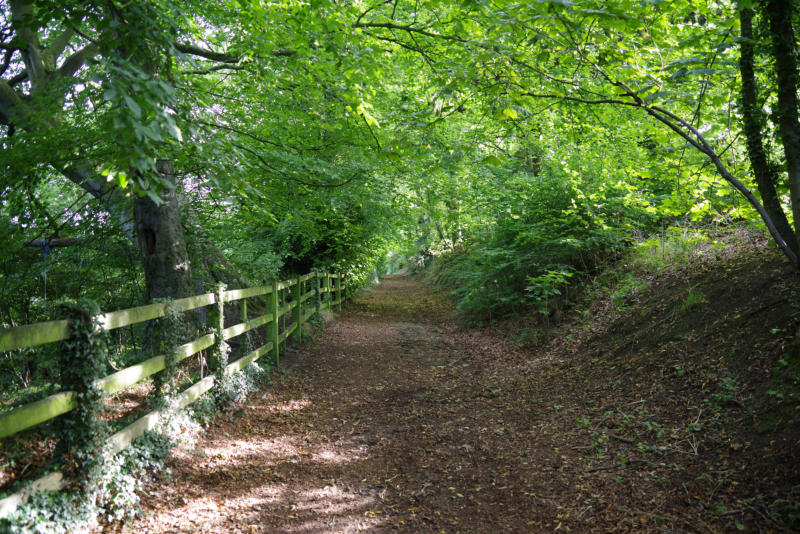
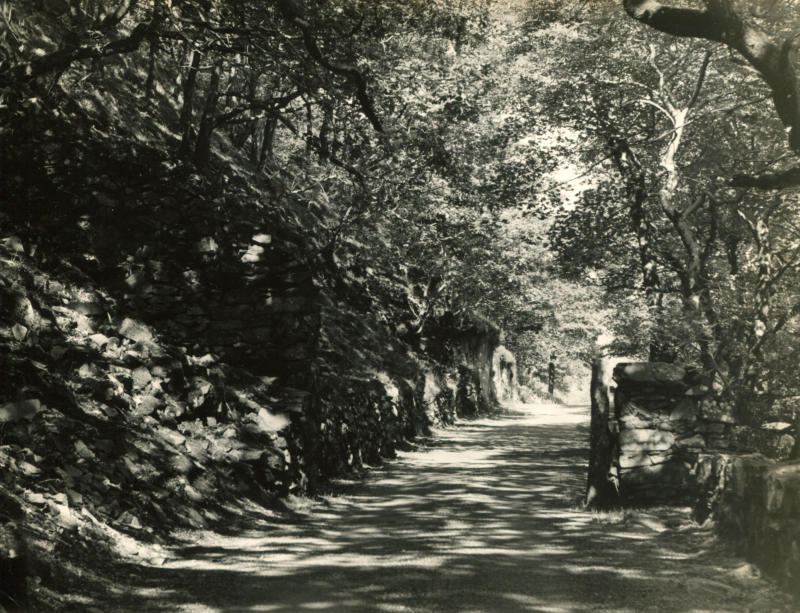
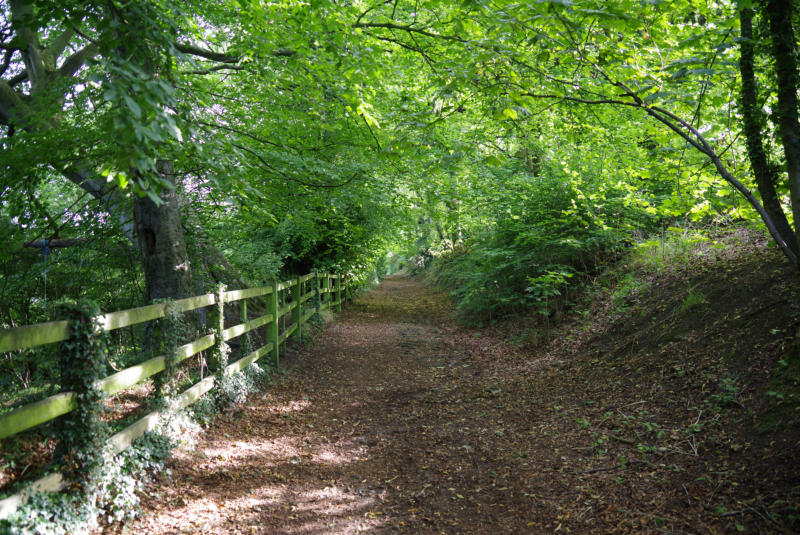
Ruiton Windmill is just a short walk from the Ellowes Hall Estate, the home of a former mansion house built in the 1820’s for the Fereday family. The house became known as ‘The Ellers’ The land was already a pleasant area of ornamental garden belonging to Samuel Fereday (1758 - 1839) as part of his small cottage. Fereday was a colliery and ironworks owner who commissioned architect Thomas Lee Junior to build a new family home. Land Tax was first introduced in 1692 along with a number of other personal taxes to raise revenue. This was in the reign of Mary II so presumably to pay for all the fighting between the English and Scottish as the restoration of the Monarchy had only happened in 1660 when King Charles II returned from exile in continental Europe. By 1798 the Land Tax Redemption Office was created under a registrar and the Land Tax became a perpetual charge. Samuel Fereday was listed in 1798 as tenant of his own property and also of Reverend Wood and Lord Dudley. Thomas Parker and Benjamin Parker were also listed as tenants of Fereday as was William Turton, his sister in law's uncle. Not quite on the scale of land ownership of Lord Dudley, The Fereday family were clearly a wealthy lot as they had many tenants listed in 1798 Plans were drawn up in 1812 but Samuel Fereday became bankrupt in 1817 and his nephew John Turton Fereday acquired the assets that remained. Samuel’s brother John Fereday (1761 - 1833) had exonerated his son William Turton Fereday of his debts and in his will exonerated his other son John Turton Fereday so all was not well financially with the Fereday family. In 1821 Lee began work at The Ellowes with access via a cobbled coach road which still exists today known as ‘The Drive’ This access has been photographed many times by locals over the years as it’s a very pleasant walk leading on to Cotwall End Nature Reserve and the Dingle Wood. The entrance to the Drive starts halfway down Moden Hill and eventually links up with what is now Ellowes Hall school with a couple of footpath links up to Old Quarry Drive and Foxlands Drive. The first photograph was taken by Ron Langston in the 1960’s and the second by us in July 2023. A range of Ron’s local photographs can be seen on the 1950’s - 70’s page. There are three 'Steppings' under the Drive, tunnels that were built in order to keep the carriageway clear of the workers walking from Ruiton to Baggeridge By 1838 the Fereday’s had moved to the smaller but not insignificant Quarry Hall, later known as “The Quarries” on Clarence Street, a short walk from Ruiton Windmill. The Fereday family like the Richmond family that built Ruiton Mill got as far away from Gornal as was possible. Whilst the Richmond’s moved to the USA the Fereday’s moved to Australia, New Zealand and the United States John Turton’s descendents went to Australasia with William Turton’s heading for America. John Turton Fereday's Great, Great, Great Grandfather was William Gibbons (1631 - 1686) who was also Great, Great, Great Granfather to Benjamin Gibbons. William Gibbons (1631 - 1686) 5x great Grandson John Skipworth Gibbons (1852 - 1942) married Constance Sarah Crane (1854 - 1927) Her brother John Henry Crane married Annie Georgina Washington Turner, a descendant of George Washington. John Henry commissioned church architect J. P. St Aubyn to design and oversee extensive modernisation at Oakhampton while he was building the distinctive clock tower at Abberley. Abberley Hills can be seen from the top of Ruiton Mill. John's daughter Ann Elizabeth married John Latty Bickley. His father Benjamin, William Gibbons and Michael Willcox took out a lease in 1784 of land, mines and furnaces at the Level in Brierley Hill. By 1840 John Latty Bickley lived at Ettingshall Lodge, the former home of the Gibbons family whilst the Fereday’s had moved from Ellowes Hall to ‘The Quarries’, a large house on Clarence Street, just a short walk from Ruiton Mill. After John Turton Fereday died in 1849, Ellowes Hall was sold to fellow industrialist William Baldwin until 1865, when it became the residence of Charles Cochrane, Mayor of Dudley. The next resident was Sir Horace St Paul, who moved there in the early 1870s and lived there until his death in 1891. The next occupant was Bilston county councillor and later MP for Wolverhampton South John Lloyd Gibbons, who lived there until his death in 1919, when it was sold to the Mitchell family. He was 6x great grandson of William Gibbons (1631 - 1686). The Mitchell family lived in the house until 1923, when it was sold to Henry Arthur Nock, who owned the house until his death in 1946. After the outbreak of the Second World War in 1939, Ellowes Hall was used as a Home Guard headquarters. The Nock family sold the house to Staffordshire Education Authority in 1963, and it was demolished in 1964 - the same year that a new secondary school with the same name was built within its grounds.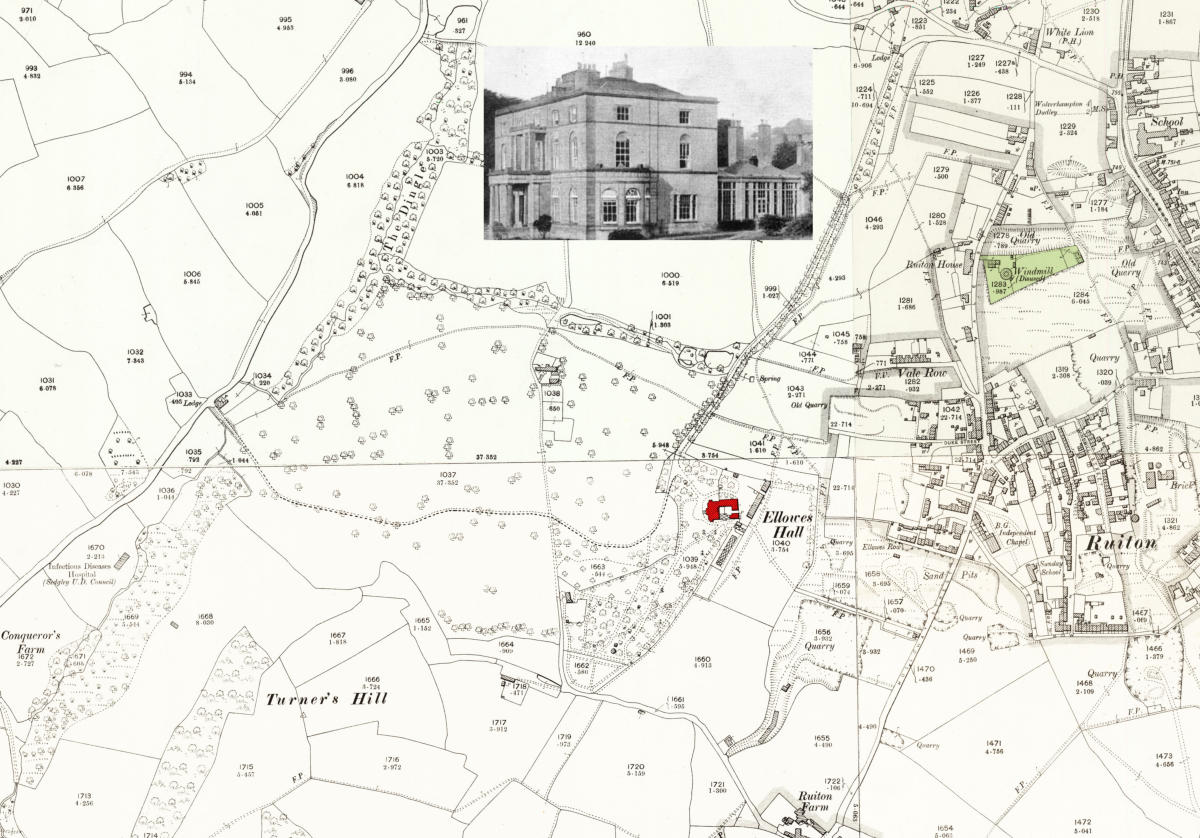

John Turton Fereday’s children
Rev. John Fereday - Tasmania
Edwin Heming Fereday - New Zealand
Richard William Fereday - New Zealand
Henry Turton Fereday - New Zealand
Emeline Harriet Fereday - New Zealand
Adelaide Rosaline Fereday - New Zealand



John Fereday (1761 - 1833)
Will
Of the will (dated 22 Dec. 1832) and codicils of John Fereday of Cotwall End, parish of Sedgley, Staffs., gentleman; exonerates his son John Turton Fereday from his debts to him as he has exonerated his son William Turton Fereday from his (as recited)
- Confirms marriage settlement and gives wife, Elizabeth Fereday, an additional annuity of £100, portion of household effects to wife for life
- annuity of £30 to Ann Raybould, wife's sister
- £500 to grandson, John Fereday, eldest son of John Turton Fereday
- £10 and a suit of mourning to servant, James Cox
- all real estate and minerals, inc. one tenth share in Caponfield Colliery, and other property to his sons and to the Revd Thomas Powell of Sedgley, Clerk and Henry Smith of Wolverhampton, Staffs., gentleman, upon trust for sale, to pay the legacies from the proceeds and the annuities from the invested balance, and otherwise to pay half the income to John Turton Fereday for life, with provisions to protect his interest in the event of bankruptcy etc., thence to divide the capital between John Turton Fereday's children
- other moiety (capital) to William, with legacies to his children of £200 to Samuel Day Fereday
- £100 to Jane Fereday and £100 to Elizabeth Fereday
- powers of trustees to manage etc; executors are above 4 trustees.
revokes his exoneration of his son from his debts to him
executors to prove debts under any assignment/bankruptcy and stand possessed of sums received for the benefit of John Turton Fereday and his issue
grants trustees power to exonerate John Turton Fereday from the debts if his affairs have been completely settled under his existing arrangements with his creditors, etc.
Codicil (dated 2 Mar, 1833) revokes appointment of Henry Smith. Endorsed notes of production in John Clifton and Benjamin Bickley v David Smith and others and Benjamin Bickley, John Hill Clifton and Archibald Duncan v David Smith and others, in Chancery
7 Apr. 1835.
John Turton Fereday (1786 - 1849)
Will
of the Quarries in the Parish of Sedgley, in the county of Stafford. Gentleman.Made this fourteenth day of April one thousand eight hundred and forty six. Whereas I have under or by virtue of the powers or authorities given or reserved to use by the Settlements made upon my marriage with my late wife Ann Celia Heming and which bear date respectively about the twenty ninth day of October one thousand eight hundred and twelve made and executed certain appointments of the settled property or parts thereof in favour of my children.
Such appointments to take effect upon and from and after my decease Here I do hereby reaffirm the said several appointments to respectively and do give devise and bequeath the estates and settled properties unto the several appointees thereof according to the true intent and meaning of the said several appointments I do appoint my Sons
- Edwin Heming Fereday and
- Richard William Fereday and my Nephew
- Samuel Day Fereday
to be executors of this my will and guardians of my infant children during their several minorities I do direct my said executors to pay all my just debts and funeral and Testamentary expenses as soon as conveniently can be after my decease.
I give device and bequeath to the said Edwin Hemming Fereday all and singular my real and Personal Estate and Effects whatsoever and wheresoever and of what nature tenure kind or quality the same may be including such property as I have power to appoint or dispose of but have not appointed or disposed of To Hold unto them their Heirs executors administrators and assigns according to the nature of such property respectively.
But upon the trusts nevertheless and for the intents and purposes following that is to say upon Trust that they my said Trustees of the survivors or survivor of them shall when and as they or he in their or his discretion think fit make sale of and convert into money my said real and Personal Estate and in order to enable them to make such sale and to realize my said estate and effects.
I do give them of him as full and ample power to make give and execute conditions contracts receipts conveyances surrenders and assurances as I myself could or as they or hearunto if they themselves were the absolute and unconditional owners or the said property respectively And to stand possessed of the money to arise from such sale and of the said real and personal estate until sale or conversion In trust after paying the expenses attending the execution of the trusts to hereby reposed in them or him and in paying my debts and funeral and testamentary expenses to pay my son Charles Henry Fereday the sum of fifty pounds as a token of my affection.
And in the next place to pay and apply two hundred pounds in providing suitable furniture and effects to furbish a house for my unmarried daughters or in case my said Trustees shall think better to select from my effects furniture and domestic requisites to the above amount and subject thereto In trust for and to divide the same proceeds or stand possessed of the said real and Personal estate and effects such of my six children (viz the said Edwin Heming Fereday, Richard William Fereday, Heming Turton Fereday, Emmeline Harriet Fereday, Frederick Francis Fereday and Adelade Roseline Fereday) as have lived or shall live to attain the age of twenty one years their his or her executors administrators or assigns provided nevertheless that of the share of my Son the said Edwin Fereday the same shall be held or invested in Government funds or on real security by my other trustees and the rents dividends interest thereof only paid to him for the term of ten years after my decease if he shall so long live.
Provided further that in case the said Edwin Heming Fereday shall become bankrupted or insolvent within the bankrupt or insolvent Laws before the expiration before the said term of ten years that his share as well original as accruing shall go over and I do hereby declare that the same shall be in trust for my Son the said Richard William Fereday, his executors administrators and assigns being my express intention that the provision so made for him my said Son Edwin Heming Fereday shall be an inalienable provision for him during the said term of ten years and that he shall not have any invested interest therein except he shall live to the expiration of the term of ten years and shall not in the mean time have been bankrupt or insolvent provided further.
And I do declare that in the mean time and until all of my children as at the time of my death shall be under age shall attain their his or her majority my said trustees shall invest their his or her presumptive share in the public funds or upon real security and shall apply the dividends interest product thereof or the rents and income portion of my estate as shall be unconverted in for and towards their his or her maintenance and duration and shall so apply such part of the principal as to them or him shall seem reasonable in advancing such child or children in the world Provided further and I do hereby declare that in case my said estate and effects shall not produce more than five thousand pounds that the said legacy of fifty pounds before given to my Son Charles Henry Fereday shall not be payable but shall sink into the residue for the benefit of my other children before named as I am sure that my said Son Charles as also my Son John and my daughter Harriet Ann Elizabeth Bickley will feel that in their worldly prospects they have advantage which their Brothers and Sisters can hardly expect to realise.
And lastly I do revoke all Wills and Codicils by me at any time heretofor made and do declare this only to be my last Will and Testament In Witness whereof I the said Testator John Turton Fereday have to this my last Will and Testament contained on these sheets of paper set my hand the day and year first above written John Turton Fereday
Signed published and declared by the said Testator John Turton Fereday as and for his last Will and Testament in the presence of us who have in the same time in his presence at his request in the presence of each other have hereunto subscribed our names as witnesses
witnesses
William T. Fereday, W Parkes

Ellowes Hall
Ruiton Windmill is just a short walk from the Ellowes Hall Estate, the home of a former mansion house built in the 1820’s for the Fereday family. The land was already a pleasant area of ornamental garden belonging to Samuel Fereday as part of his small cottage. Fereday was a colliery and ironworks owner who commissioned architect Thomas Lee Junior to build a new family home. Plans were drawn up in 1812 but Fereday became bankrupt in 1817 and his nephew John Turton Fereday acquired the assets that remained. In 1821 Lee began work at The Ellowes with access via a cobbled coach road which still exists today known as ‘The Drive’ This access has been photographed many times by locals over the years as it’s a very pleasant walk leading on to Cotwall End Nature Reserve and the Dingle Wood. The entrance to the Drive starts halfway down Moden Hill and eventually links up with what is now Ellowes Hall school with a couple of footpath links up to Old Quarry Drive and Foxlands Drive. The first photograph was taken by Ron Langston in the 1960’s and the second by us in July 2023. A range of Ron’s local photographs can be seen in the gallery at the bottom of this page. There are three 'Steppings' under the Drive, tunnels that were built in order to keep the carriageway clear of the workers walking from Ruiton to Baggeridge The Fereday family like the Richmond family that built Ruiton Mill got as far away from Gornal as was possible. Whilst the Richmond’s moved to the USA the Fereday’s moved to Australia, New Zealand and the United States John Turton’s descendents went to Australasia with William Turton’s heading for America. John Turton Fereday's Great, Great, Great Grandfather was William Gibbons (1631 - 1686) who was also Great, Great, Great Granfather to Benjamin Gibbons. William Gibbons (1631 - 1686) 5x great Grandson John Skipworth Gibbons (1852 - 1942) married Constance Sarah Crane (1854 - 1927) Her brother John Henry Crane married Annie Georgina Washington Turner, a descendant of George Washington. John Henry commissioned church architect J. P. St Aubyn to design and oversee extensive modernisation at Oakhampton while he was building the distinctive clock tower at Abberley. Abberley Hills can be seen from the top of Ruiton Mill. John's daughter Ann Elizabeth married John Latty Bickley. His father Benjamin, William Gibbons and Michael Willcox took out a lease in 1784 of land, mines and furnaces at the Level in Brierley Hill. By 1840 John Latty Bickley lived at Ettingshall Lodge, the former home of the Gibbons family whilst the Fereday’s had moved from Ellowes Hall to ‘The Quarries’, a large house on Clarence Street, just a short walk from Ruiton Mill. After John Turton Fereday died in 1849, Ellowes Hall was sold to fellow industrialist William Baldwin until 1865, when it became the residence of Charles Cochrane, Mayor of Dudley. The next resident was Sir Horace St Paul, who moved there in the early 1870s and lived there until his death in 1891. The next occupant was Bilston county councillor and later MP for Wolverhampton South John Gibbons, who lived there until his death in 1919, when it was sold to the Mitchell family. He was 6x great grandson of William Gibbons (1631 - 1686). The Mitchell family lived in the house until 1923, when it was sold to Henry Arthur Nock, who owned the house until his death in 1946. After the outbreak of the Second World War in 1939, Ellowes Hall was used as a Home Guard headquarters. The Nock family sold the house to Staffordshire Education Authority in 1963, and it was demolished in 1964 - the same year that a new secondary school with the same name was built within its grounds.


- News
- Bookings
- History
- Galleries
- The Area
- The Mill
- Friends
- Contact
