Dud Dudley
Dud Dudley was born in turbulent times. Queen Elizabeth I was near the end of her reign (1603) Elizabeth I became Queen following the early death of Edward VI at the age of 15.
She was the eighth child of Henry VIII but followed both Edward (12th child) and Queen Mary I (5th child) who had both died leaving no heirs. Most of the rest of Henry VIII's
children died at very early ages.
Elizabeth was unmarried so in 1603 when Dud was four years old Henry VII's great great grandson James I, the Scottish King (James VI of Scotland) became king until his death in
1625 when Charles I became the monarch.
Charles I was executed in 1649 in the culmination of political and military conflicts between the royalists (Cavaliers) and the parliamentarians (Roundheads) in England during the
English Civil War. No monarch reigned until 1653, there was no single English head of state, as England was ruled directly by the Rump Parliament.
On 16th December Oliver Cromwell forcibly took control of England from Parliament until the Monarchy was restored when Charles II returned from exile and became King on the
29th May 1660.
Dud was related to Alfred the Great via the Sutton family marriage to the Tiptoft family of Great Eversden in Cambridgeshire.
John Tiptoft was 1st Baron Tiptoft, Knight of the Shire and Speaker of the House of Commons.
Although William the Conqueror took the English crown via the Battle of Hastings, he was actually related by marriage to Alfred. His son, Henry I was also related by marriage as his
wife Matilda was related through her Scottish ancestry to Edward the Elder, Alfred the Great’s son.
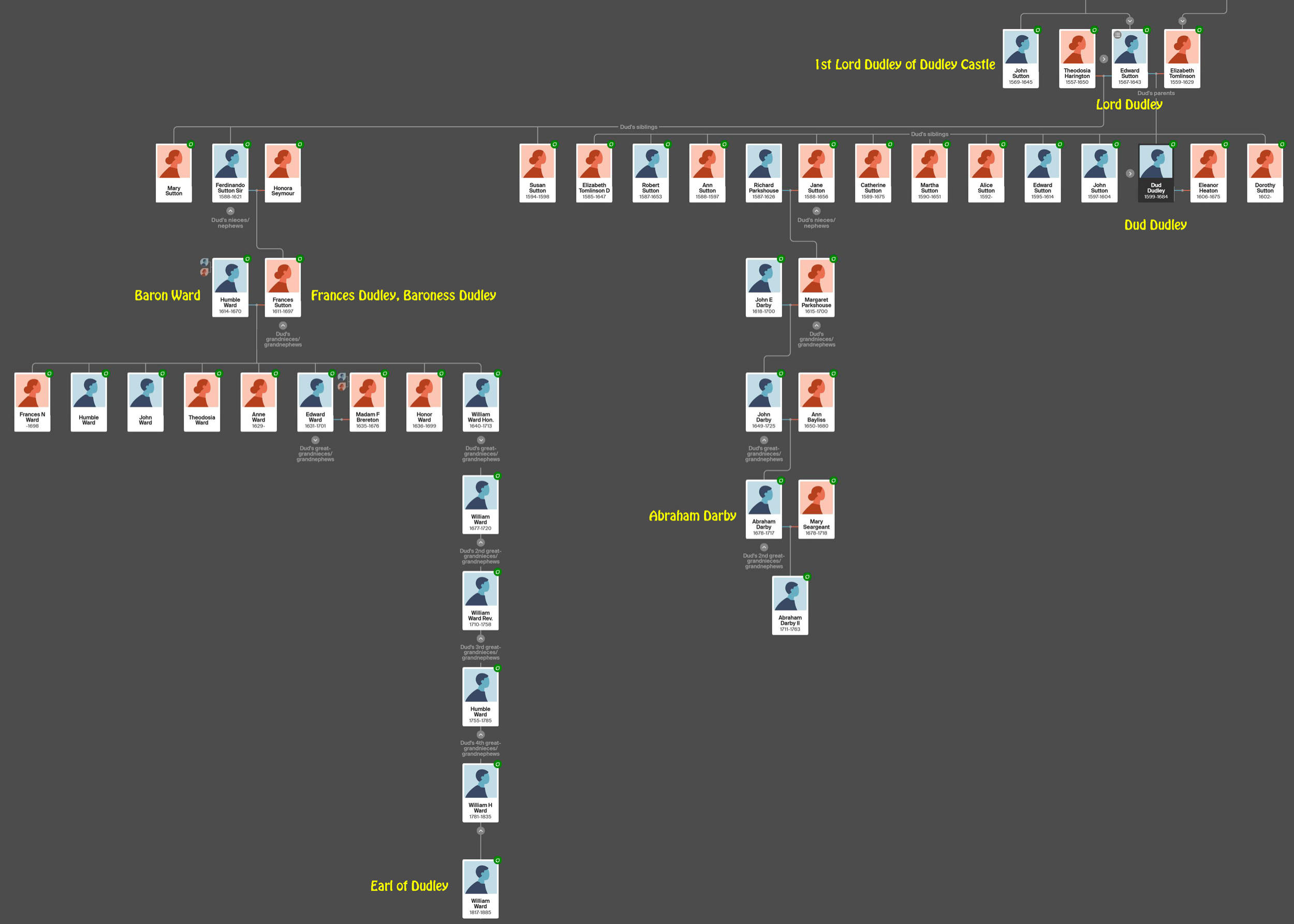
Dud was the fourth natural son of Edward Sutton, 5th Baron Dudley (1567-1643) and owner of Dudley Castle.
Edward Sutton was an English peer, politician and landowner who briefly sat in the House of Commons. Through his intemperate behaviour he won
widespread notoriety, completed the financial ruin of his family, and was the last of his name to bear the title.
Sutton was married at the age of 14 to a 19 year old Theodosia Harington and initially became an actor. Theodosia came from a very distinguished family, Sir
William Harrington of Farleton was Henry V’s standard-bearer at Agincourt and was made a Knight of the Garter in 1416. Sutton became Lord Dudley in 1586
when he inherited his father's title, although he did not take his seat in the House of Lords until 1593. He and Theodosia had a son and four daughters.
Dud was however born to Sutton and his long-time mistress Elizabeth Tomlinson, who bore him a large family of at least 11 illegitimate children.
Sutton financially supported his illegitimate family rather than his marriage family and sent Dud to Oxford University (Balliol College) but brought him back
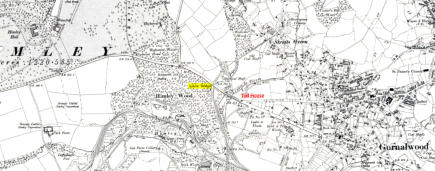
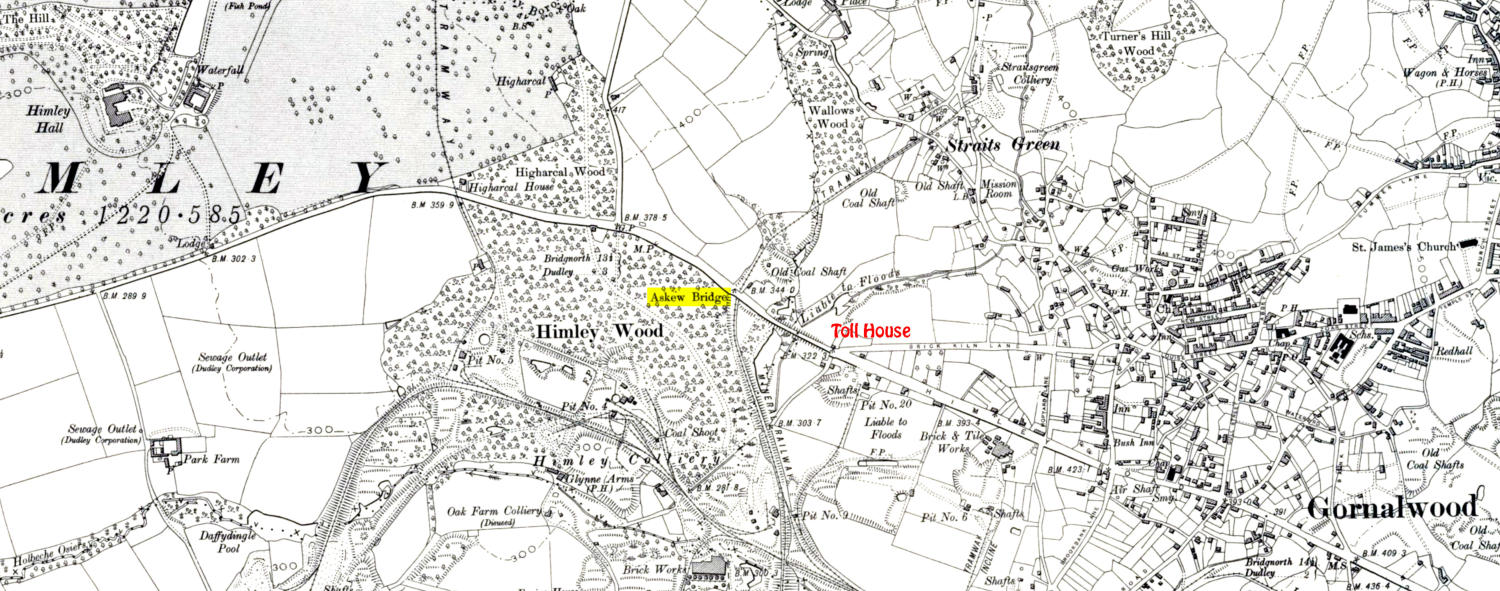
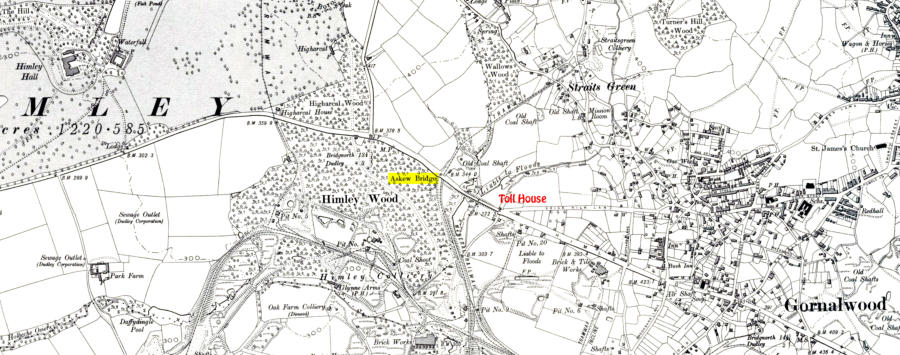
to Gornal in 1619 to run his ironworks at Hasco Bridge, now known as Askew Bridge.
Sutton’s main family home was Dudley Castle although it is believed that his illegitimate family were housed in Himley Hall, close to Askew Bridge.
Sutton’s Ironworks at Askew Bridge was located on the boundary between Gornal and Himley where Straits Brook passes under the Himley Road. At the time there was a large pool
which extended both sides of the road and this fed just one furnace and two forges, all of them being worked with charcoal which was the go to fuel at the time. There was an
abundance of pit coal in the area with the Gornal seam being around 10 foot thick and it was here that Dud Dudley set about altering the furnaces to be able to use coal. Dudley
found that the quality of the iron produced was “good and profitable”.
This was a breakthrough and the beginnings of the start of the Industrial Revolution as Queen Elizabeth I had passed an act to protect timber which was rapidly declining due to
the amount of charcoal which was being used.
Experiments were being done around this time to produce a more efficient way of producing
a charcoal type substance from coal rather than wood.
By distilling bituminous coal in retorts to obtain gas for illumination, or by burning it in kilns
or pits, the residue left behind is called coke, which is simply coal charcoal, and is nearly pure
carbon.
This greatly increased the possibilities of producing not only cast iron but also better quality
ales as the roasting of malt couldn’t be done using coal as the sulphur fumes would ruin the
taste of the beer.
On the 22 February 1621 Edward Sutton obtained a 14 year patent from James I for high
quality iron on behalf of Dud but the May Day flood of 1622 destroyed the ironworks.
Dudley then erected a new furnace at Himley to be able to supply iron to the King.
Dudley was then producing a British record amount of Pig Iron from this furnace until his
bellows were destroyed by competitors and moved his production away from Gornal.
He was granted several patents by Oliver Cromwell for making iron with pit coal but his patent was not renewed when Charles II came to power.
Dud served as an army officer in the English Civil War for the Royalists (Cavaliers) becoming a Colonel but was taken prisoner at the end of the Siege of Worcester in 1646. He was
sent to London and tried for treason. He and his fellow conspirators were condemned to death, but escaped and managed to hide out as a Doctor until the Restoration where his
lands were reverted to him.
In 1665 Dud Dudley wrote a book “Metallum Martis” the earliest known reference to the use of coal in metallurgical smelting.
Dud’s older sister Jane Sutton (Dudley) married Richard Parkshouse in Tipton on 19 Oct 1609. Parkshouse was referred to in Metallum Martis just as “Parkes”. He was employed to
convey samples of Dud's iron to the Tower of London for testing. It is stated that the same "Parkes" also owned a fowling gun made from 'pit-coal iron', which was confiscated by
Colonel Leveson, the governor of Dudley Castle, and never returned. He died in 1626, at the age of only thirty-eight but Jane continued to live in Gornal for another thirty years.
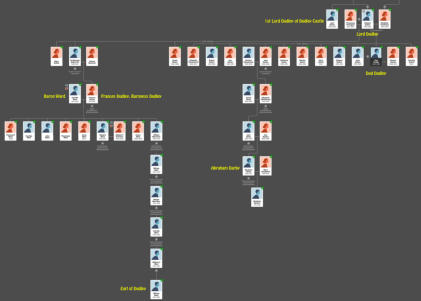
Richard & Jane’s daughter Margaret married John Darby - his Grandson was Abraham Darby
Dud's elder half brother Sir Ferdinando Sutton married Honora Seymour, a daughter of Edward Seymour, Viscount Beauchamp. Their Daughter Frances Sutton, 6th Baroness Dudley
married Humble Ward, the son of a wealthy London goldsmith William Ward in 1628.
Dud’s elder sister Ann Sutton married John Bagley, their Grandson Edward Bagley inherited the estate of William Shakespeare when his Grand daughter Lady Elizabeth Bernard died
leaving no heirs, although they were not married.
Dud Dudley's attempts to improve the productivity and quality of iron production, proved financially disastrous. This resulted in him having to sell, mortgage or otherwise raise
funds to satisfy his business adventures. Lord Dudley's financial predicament was largely transferred to the Ward family.
Dud Dudley died in 1684, at age 85.



Dud Dudley
Dud Dudley was born in turbulent times. Queen Elizabeth I was near the
end of her reign (1603) Elizabeth I became Queen following the early
death of Edward VI at the age of 15. She was the eighth child of Henry
VIII but followed both Edward (12th child) and Queen Mary I (5th child)
who had both died leaving no heirs. Most of the rest of Henry VIII's
children died at very early ages.
Elizabeth was unmarried so in 1603 when Dud was four years old Henry
VII's great great grandson James I, the Scottish King (James VI of
Scotland) became king until his death in 1625 when Charles I became
the monarch.
Charles I was executed in 1649 in the culmination of political and
military conflicts between the royalists (Cavaliers) and the
parliamentarians (Roundheads) in England during the English Civil War.
No monarch reigned until 1653, there was no single English head of
state, as England was ruled directly by the Rump Parliament.
On 16th December Oliver Cromwell forcibly took control of England
from Parliament until the Monarchy was restored when Charles II
returned from exile and became King on the 29th May 1660.
Dud was the fourth natural son of Edward Sutton,
5th Baron Dudley (1567-1643) and owner of
Dudley Castle.
Edward Sutton was an English peer, politician and
landowner who briefly sat in the House of
Commons. Through his intemperate behaviour he
won widespread notoriety, completed the
financial ruin of his family, and was the last of his
name to bear the title.
Sutton was married at the age of 14 to a 19 year old Theodosia
Harington and initially became an actor. Theodosia came from a very
distinguished family, Sir William Harrington of Farleton was Henry V’s
standard-bearer at Agincourt and was made a Knight of the Garter in
1416. Sutton became Lord Dudley in 1586 when he inherited his father's
title, although he did not take his seat in the House of Lords until 1593.
He and Theodosia had a son and four daughters.
Dud was however born to Sutton and his long-time mistress Elizabeth
Tomlinson, who bore him a large family of at least 11 illegitimate
children.
Sutton financially supported his illegitimate family rather than his
marriage family and sent Dud to Oxford University (Balliol College) but
brought him back to Gornal in 1619 to run his ironworks at Hasco
Bridge, now known as Askew Bridge.
Sutton’s main family home was Dudley Castle although it is believed
that his illegitimate family were housed in Himley Hall, close to Askew
Bridge.
Sutton’s Ironworks at Askew Bridge was located on the boundary
between Gornal and Himley where Straits Brook passes under the
Himley Road. At the time there was a large pool which extended both
sides of the road and this fed just one furnace and two forges, all of
them being worked with charcoal which was the go to fuel at the time.
There was an abundance of pit coal in the area with the Gornal seam
being around 10 foot thick and it was here that Dud Dudley set about
altering the furnaces to be able to use coal. Dudley found that the
quality of the iron produced was “good and profitable”.
This was a breakthrough and the beginnings of the start of the
Industrial Revolution as Queen Elizabeth I had passed an act to protect
timber which was rapidly declining due to the amount of charcoal which
was being used.
Experiments were being done around this time to produce a more
efficient way of producing a charcoal type substance from coal rather
than wood.
By distilling bituminous coal in retorts to obtain gas for illumination, or
by burning it in kilns or pits, the residue left behind is called coke, which
is simply coal charcoal, and is nearly pure carbon.
This greatly increased the possibilities of producing not only cast iron
but also better quality ales as the roasting of malt couldn’t be done
using coal as the sulphur fumes would ruin the taste of the beer.
On the 22 February 1621 Edward Sutton obtained a 14 year patent from
James I for high quality iron on behalf of Dud but the May Day flood of
1622 destroyed the ironworks.
Dudley then erected a new furnace at Himley to be able to supply iron to
the King.
Dudley was then producing a British record amount of Pig Iron from this
furnace until his bellows were destroyed by competitors and moved his
production away from Gornal.
He was granted several patents by Oliver Cromwell for making iron with
pit coal but his patent was not renewed when Charles II came to power.
Dud served as an army officer in the English Civil War for the Royalists
(Cavaliers) becoming a Colonel but was taken prisoner at the end of the
Siege of Worcester in 1646. He was sent to London and tried for treason.
He and his fellow conspirators were condemned to death, but escaped
and managed to hide out as a Doctor until the Restoration where his
lands were reverted to him.
In 1665 Dud Dudley wrote a book “Metallum Martis” the earliest known
reference to the use of coal in metallurgical smelting.
Dud’s older sister Jane Sutton (Dudley) married Richard Parkshouse in
Tipton on 19 Oct 1609. Parkshouse was referred to in Metallum Martis
just as “Parkes”. He was employed to convey samples of Dud's iron to the
Tower of London for testing. It is stated that the same "Parkes" also
owned a fowling gun made from 'pit-coal iron', which was confiscated by
Colonel Leveson, the governor of Dudley Castle, and never returned. He
died in 1626, at the age of only thirty-eight but Jane continued to live in
Gornal for another thirty years.
Richard & Jane’s daughter Margaret married John Darby - his Grandson
was Abraham Darby
Dud's elder half brother Sir Ferdinando Sutton married Honora Seymour,
a daughter of Edward Seymour, Viscount Beauchamp. Their Daughter
Frances Sutton, 6th Baroness Dudley married Humble Ward, the son of a
wealthy London goldsmith William Ward in 1628.
Dud’s elder sister Ann Sutton married John Bagley, their Grandson
Edward Bagley inherited the estate of William Shakespeare when his
Grand daughter Lady Elizabeth Bernard died leaving no heirs, although
they were not married.
Dud Dudley's attempts to improve the productivity and quality of iron
production, proved financially disastrous. This resulted in him having to
sell, mortgage or otherwise raise funds to satisfy his business
adventures. Lord Dudley's financial predicament was largely transferred
to the Ward family.
Dud Dudley died in 1684, at age 85.